July 13, 2026
Why Customers Prefer 3D Interactive Product Guides

.png)

Interactive 3D product guides replace flat paper manuals with dynamic, rotatable models accessible via web or mobile. By simplifying complex assembly and offering real-time updates, they boost buyer confidence and cut returns.
Here's a confession most manufacturers won't put in writing. A good chunk of product returns have nothing to do with the product itself; they happen because someone couldn't figure out how to put it together. A bent bracket, a screw that went in backward, a step skipped because the diagram showed it from the wrong angle.
We've all lived some version of this: a living room floor covered in parts and a manual that reads more like a puzzle than a guide. That frustration is pushing brands toward 3D interactive product guides; digital instructions people can rotate and follow one step at a time.
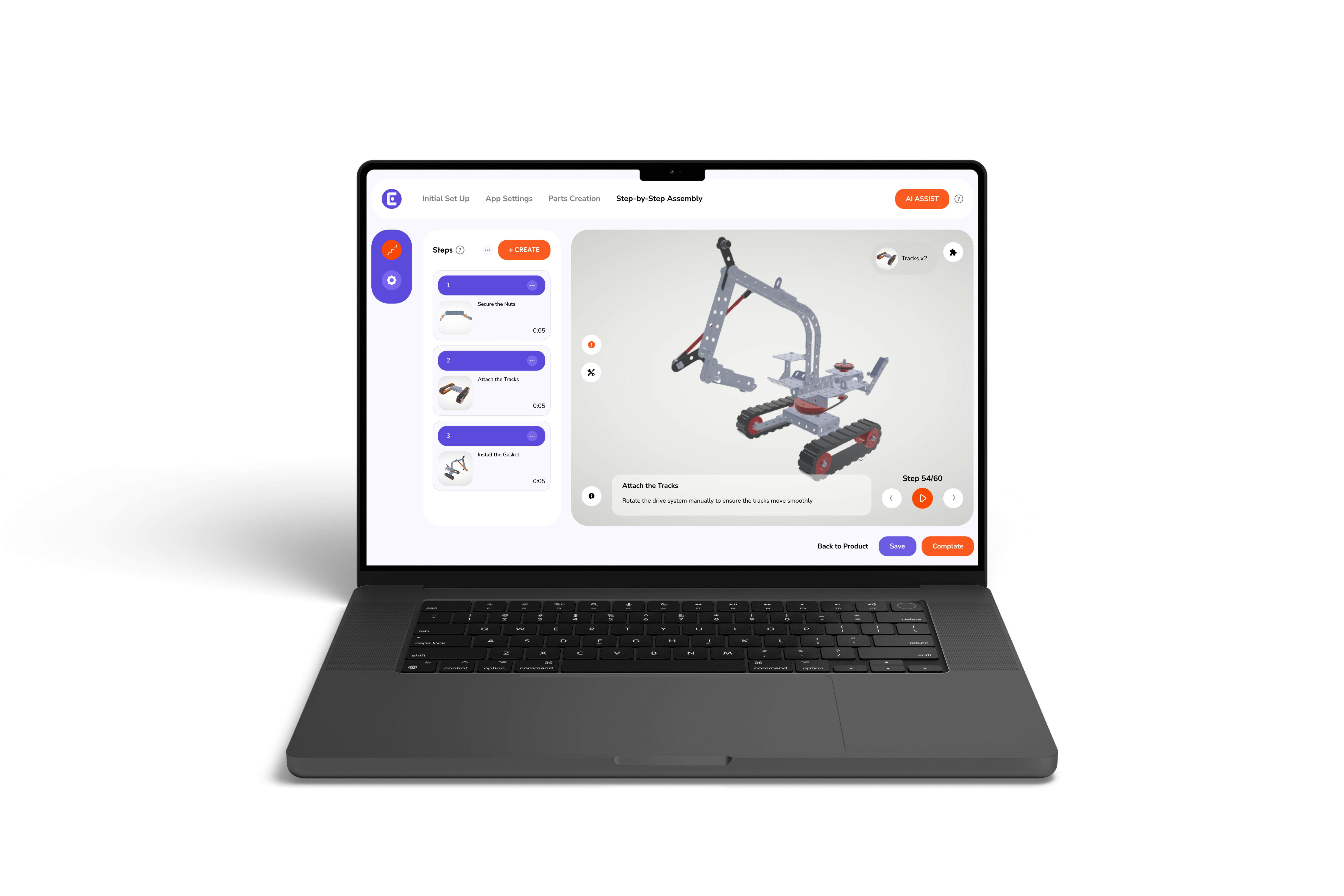
At its core, a 3D interactive product guide replaces the flat diagram with a model you can actually turn around and look at from every angle. Instead of guessing which flat piece matches which icon, the customer sees the part highlighted in place, watches it move, and taps through the process one screen at a time.
It sounds simple, and honestly, it is. That's part of the appeal. There's no learning curve for the customer, no separate app to figure out, no squinting at a booklet under bad lighting. It works whether someone is unboxing tech products instructions for a new speaker system or following interactive assembly guides for a modular shelving unit.
Manufacturers upload their existing 3D files, the guide gets built around them, and the customer just follows along on their phone, tablet, or laptop.
Here's the thing about paper manuals: they were built for a world where products were simpler, and returns were rarer. Neither of those is true anymore.
A few reasons customers keep getting stuck:
None of this is really the customer's fault. A flat page just cannot show depth, motion, or sequence the way a screen can. So, when something goes wrong midway through, people are left flipping back and forth, trying to reverse engineer where they went off track.
Brands using interactive 3D product experiences have reported reducing product return rates by 25-40%, largely because customers better understand what they're buying and how to assemble it.
This is where the shift starts making sense. Once people experience 3D product instructions instead of paper ones, going back feels like a downgrade, similar to returning to a flip phone after using a smartphone.
Here's a quick look at how the two compare side by side:
Beyond that comparison, the benefits of interactive product guides tend to show up in a few consistent ways for customers:
It adds up to something that feels less like a chore and more like actually being guided through a task, which, honestly, is what a manual was supposed to do in the first place.
Here's something worth sitting with for a second. A lot of buying hesitation happens before checkout, not after. Someone adds a product to their cart, then pauses, wondering if they'll actually be able to put it together once it arrives.
That hesitation is where interactive assembly guides start doing work the manual never could. When a brand embeds a preview of the assembly process directly on the product page, customers get to see exactly what they're signing up for. No surprises after delivery.
It also changes what happens after the sale. Someone who assembled a product with zero frustration is far more likely to leave a good review, or actually consider the accessories or replacement parts a brand recommends afterward. That post-assembly moment carries more weight than most brands give it credit for.
It's a fair question, and honestly, the direction seems pretty clear already. Digital product guides are not a passing trend; they're solving a problem that's existed for decades, and solving it in a way paper simply cannot match.
Think about what happens when a company finds an error in step 12 of their instructions. With a printed manual, that mistake sits in every warehouse and every customer's hands until the next print run. With a digital format, it gets corrected once, and every customer sees the fix immediately.
A quick side-by-side of where the two formats diverge going forward:
That's really the shape of where things are headed. The future of digital assembly instructions looks less like a static file and more like a living document, one that updates, tracks how customers actually use it, and adjusts based on where people tend to get stuck.
Add in the shift toward interactive work instructions inside training and installation settings, not just consumer products, and it's clear this isn't only about convenience anymore. It's becoming the expected standard.
We noticed this pattern across nearly every industry we work with: furniture, electronics, modular construction, sports equipment; it didn't matter. Customers kept running into the same wall with paper instructions, and manufacturers kept absorbing the cost through support calls, returns, and one-star reviews that had nothing to do with the product itself and everything to do with the instructions.
That's the gap we built Easemble to close. We take a manufacturer's existing 3D files and turn them into interactive assembly manuals customers can access on the web, mobile, or as a printable PDF and video, all published from a single source.
Updates go live everywhere at once; translations happen without managing separate files, and manufacturers get a clear look at where customers actually pause or struggle through built-in analytics.
If a user-friendly assembly manual sounds like something your product line is missing, it's worth seeing how the process works in practice. You can look through how it works or book a demo to see a manual built around your own 3D files.
Paper manuals were never really designed for how complex products have become, and customers have felt that friction for years without always being able to name it. The shift toward interactive, trackable instructions is already underway, and it's shaping the future of 3D assembly instructions in a way static diagrams simply can't keep up with.
If your customers are still unfolding a paper booklet to figure out how your product works, that's probably costing you more than you realize, in support calls, returns, and reviews that could have gone differently. A demo is the easiest way to see what that difference actually looks like.
A 3D interactive product guide is a digital manual letting users rotate, zoom, and follow assembly steps from any angle.
They eliminate assembly confusion, reducing product return rates by 25–40% through clear, step-by-step 3D visual instructions.
Paper manuals lack 3D angles, instant language updates, progress tracking, and interactive step-by-step guidance.
Yes, embedding 3D assembly previews on product pages shows buyers step-by-step setup requirements before purchase.
Easemble transforms existing 3D files into multi-platform digital guides featuring real-time updates, multi-language support, and analytics.