March 16, 2026
The Future of 3D Assembly Instructions – An Overview
.png)

The future of 3D assembly instructions is not just about cleaner screens. It is about helping people build things with less doubt, less waste, and less backtracking. Today’s paper manuals still slow teams down, while the future of interactive product manuals points toward clearer steps, smarter checks, and better support on the floor. This shift matters now because the future of assembly instructions is being shaped by AR, smart tools, and faster ways to create and update content.
So, let’s start by first discussing how 3D assembly instructions are doing these well.
The future of 3D assembly instructions starts with what they already solved today. A worker can spin a model, zoom into a joint, and see part fit in a way a flat page cannot match. That alone cuts a lot of the small confusion that slows a build. It is also why many teams are moving from paper sheets to digital instruction manuals for products that have many similar-looking parts.
Paper manuals can show the right steps and still leave room for doubt. A part can look too small, a screw hole can be hard to spot, and a step can be missed when the page is crowded. Those are the moments where the future of 3D assembly instructions starts to matter, because clear visual guidance reduces the guesswork that workers feel on the floor.
That is part of the benefits of 3D interactive product manual work when products are detailed and time is tight.
Digital instruction manuals make updates easier too. When a product changes, a good digital guide can change with it, instead of waiting for reprints or scattered files. That matters because the future of 3D assembly instructions will depend on keeping the guide close to the product, not days behind it.
The future of 3D assembly instructions will likely lean more on AR when the task gets harder to see with the eye alone. That is especially true for products with hidden joints, tight spaces, or steps that depend on exact placement. In those cases, augmented reality assembly can place guidance where the worker needs it, not off to the side on a bench.
One study on AR instructions found that they outperformed 2D documents across user skill levels in assembly guidance, which is a strong sign that visual context matters. At the same time, other industrial research shows that AR does not help every task in the same way, and a poor setup can even slow work down. That is a useful reminder for the future of interactive product manuals. The win is not AR by itself. The win is clear design, good fit, and the right level of guidance for the task.
For manufacturers, the future of 3D assembly instructions will likely focus on usefulness over flash:
The future of digital assembly instructions and smart tools is about connection. AR screens, sensors, voice input, and live content updates may work together instead of sitting in separate systems. Recent industry guidance points to AR work instruction creation directly from CAD models, with automated updates that keep guidance aligned with current designs. It also points to smart tools and voice modules as part of a more connected worker setup.
A smart screwdriver, torque wrench, or sensor can feed live data into the guide. That means the system can help confirm whether a step was done right, instead of waiting for a problem later. The future of 3D assembly instructions will likely move in this direction because it makes the guide less passive and more useful in the moment.
Training is where the shift becomes very real. In one AR case study from Fujitsu, operator training dropped from three to five days to about one hour, and assembly time also improved. That does not mean every company will see the same result, but it does show how much room there is when the guide is clear, and the task is well-suited to AR support.
It also points to how augmented reality assembly enhances training and reduces errors when the system gives workers the right help at the right time.
The future of 3D assembly instructions will probably show up first in three places: training, accuracy, and support load. When a new hire can follow a guide without constant questions, supervisors get more time back. When a worker can see the part in context, there is less room for wrong placement or skipped steps. And when the manual updates fast, fewer people have to work around old information.
This is also where the future of 3D assembly instructions becomes easier to judge in practice. The gains do not have to be dramatic on day one. They just need to be steady and useful. That is usually what gets a team to trust a new system.
The future of 3D assembly instructions will reward teams that start with one useful step, not a huge rebuild. A small pilot lets you learn what workers need, which steps cause the most friction, and where a visual guide helps the most. That is often the easiest path to real adoption because it keeps the floor running while the new process proves itself.
Start with one product family that tends to cause questions, rework, or slow onboarding. Then convert that workflow into a clean guide with clear steps and simple checks. If your team is asking how 3D assembly instructions enhance training and reduce errors, this is where the answer begins to show itself. Workers learn faster when the steps are easy to follow and the guide matches the real task.
The future of assembly instructions will not land all at once. It will come through careful rollouts, better content, and the steady removal of the small problems that make work harder than it should be. That is why the future of 3D assembly instructions will matter most to teams that care about daily execution, not just new tools.
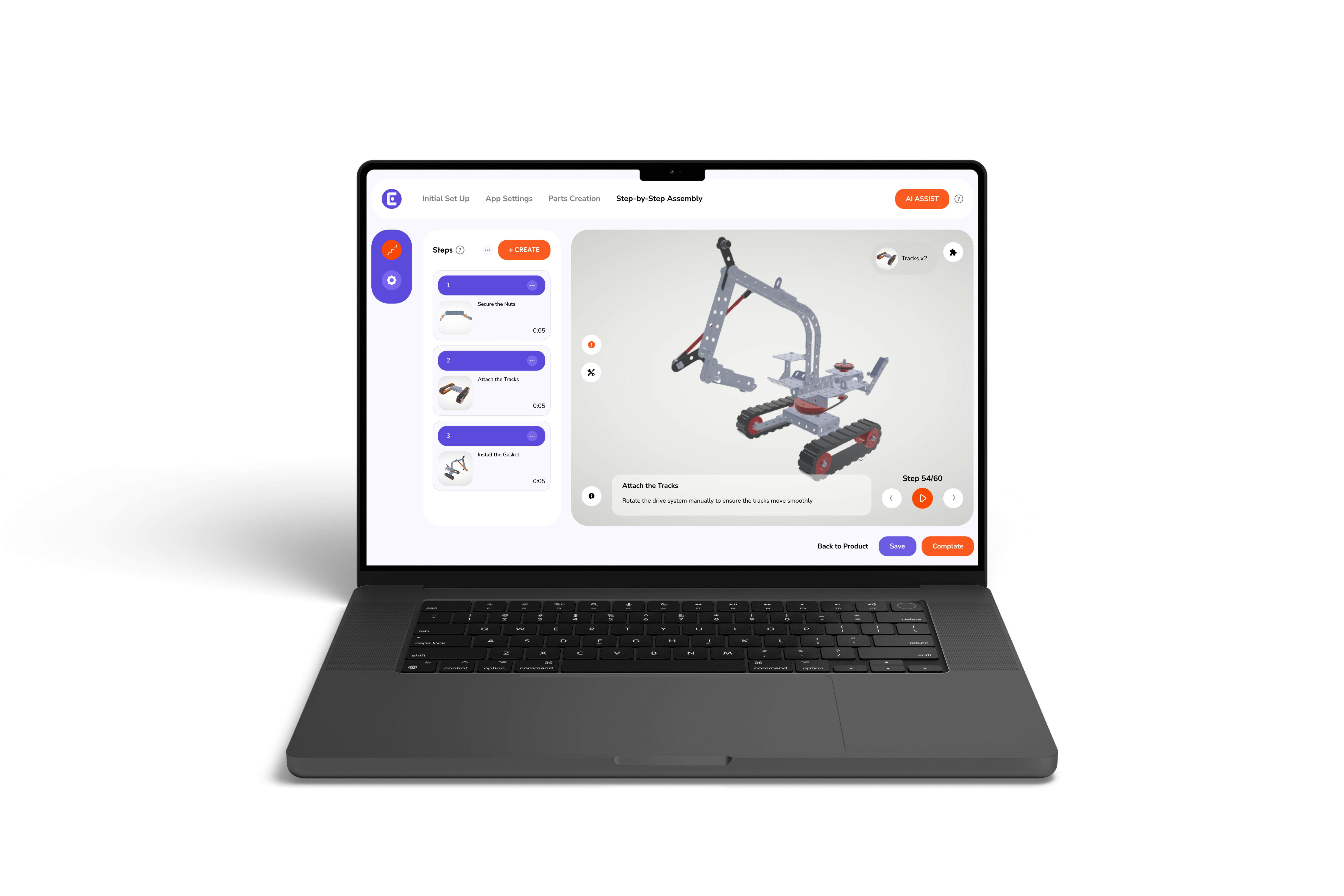
Easemble already gives manufacturers a practical way to move in this direction. Its web creator, 3D control features, mobile and tablet support, and AR options make it easier to build and use interactive guides without a heavy setup. The platform also uses pay-per-product pricing, which helps teams start small and grow at a pace that fits their catalog. That matters because the future of 3D assembly instructions will not be won by software alone.
It will be won by tools that help people learn faster, make fewer mistakes, and stay aligned as products change. Easemble fits that need by tying visual instruction, updates, and access into one practical workflow.
In summary, the future of 3D assembly instructions will be shaped by clearer visuals, smarter checks, and faster training. It will also depend on tools that fit the way people already work. If you are ready to move toward that future, Easemble offers a practical place to begin with digital instruction manuals that your team can actually use.
Not always. Many teams start with one product line and keep paper as backup while the new process proves itself. That phased approach fits the future of 3D assembly instructions well because it keeps the change manageable.
No. Research shows AR can help a lot, but task design and setup matter. Some systems improve performance, while others can add time if they are not built well.
They let workers learn from the same steps they will use on the floor. That makes the training closer to the real task and easier to repeat.
Yes. Easemble says its guides work on mobile and tablet, and its platform supports real-time updates and AR features.