April 9, 2026
3D Product Documentation: A Complete Guide to Smarter Digital Manuals and Assembly Instructions

.png)

Let’s start with something relatable. You buy a product, open the box, and then you’re stuck staring at a manual that somehow makes things more confusing instead of easier. That experience is exactly why 3D product documentation is becoming so important today. Instead of relying on static images and long paragraphs, product documentation brings assembly instructions to life. It allows users to see, interact, and actually understand what they’re supposed to do. And once people experience this level of clarity, there’s really no going back. Businesses are quickly catching on, too; they’re realizing that 3D documentation doesn’t just improve user experience. Thus, it also reduces errors, cuts costs, and builds stronger customer trust.
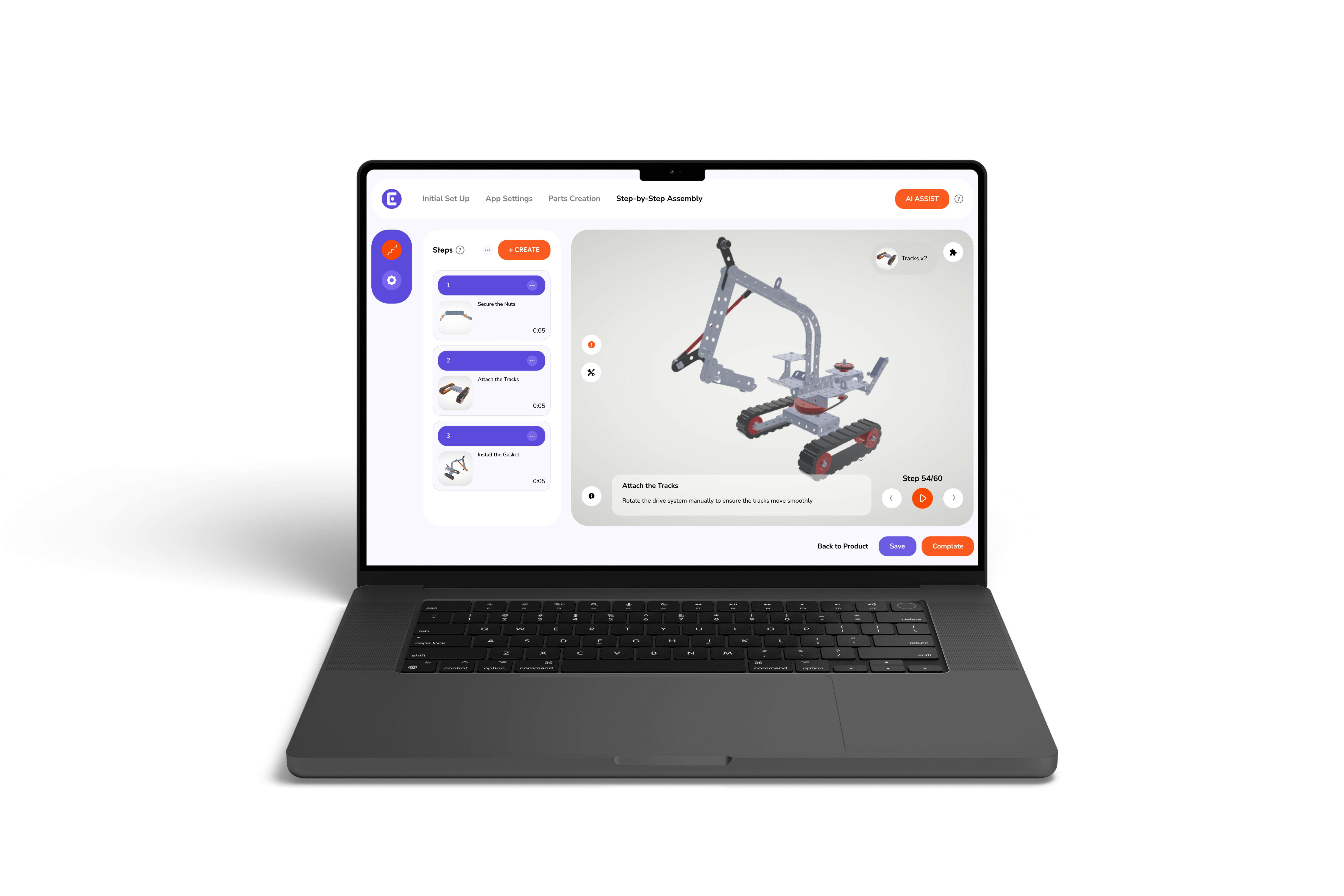
So, what exactly is 3D product documentation? In simple terms, it’s a digital way of presenting 3d assembly instructions using interactive 3D models. Instead of flipping through pages, users can explore a product visually, rotate it, zoom in, and follow steps in real time. Most of this is powered by CAD-based documentation, where design files are used to create accurate visual guides. This ensures that 3D product documentation reflects the actual product down to the smallest detail. And that’s the real advantage of product documentation that removes guesswork completely.
To understand how it all works, let’s break down the essentials of 3D technical documentation. First, there are interactive 3D models that represent every component. Then come animations that show how parts move or connect. One of the most valuable elements is the 3D assembly manual, which guides users' step by step in a visual format.
All of this is delivered through digital product manuals, where users can interact with content instead of just reading it. This is where 3D product documentation becomes incredibly effective; it turns instructions into an experience.
Let’s talk about a common problem: bad instructions. This is exactly why tech products need better installation instructions is such an important conversation. When instructions are unclear, users make mistakes. That leads to frustration, product damage, and increased support requests. However, with 3D product documentation, these issues are significantly reduced. Users can clearly see each step, making it much easier to get things right the first time. Better instructions don’t just help users; they also protect your brand and improve customer satisfaction.
Another key concept here is digital work instructions. These are step-by-step guides delivered digitally, often enhanced with visuals and interactive features. When combined with 3D product documentation, they become even more powerful. Instead of relying on outdated paper manuals, teams can access accurate, up-to-date instructions anytime. This improves consistency, reduces errors, and makes training much more efficient.
Now let’s get into how 3d interactive guide simplifies product assembly. With 3D product documentation, users don’t have to guess how parts fit together. They can see the entire process in a 3D environment. They can rotate the model, zoom into details, and move step by step at their own pace. This makes assembly faster, easier, and far less frustrating. Whether it’s a customer at home or a technician on-site, documentation helps them work with confidence.
There are several key benefits of 3D interactive product manual. First, it improves engagement. People naturally understand visuals better than text. Second, it speeds up learning and reduces errors. Third, it lowers costs by minimizing returns and support needs. Another major benefit is flexibility. Since everything is digital, updates can be made instantly. With 3D product documentation, there’s no need to reprint or redistribute manuals. It’s a smarter, more efficient way to handle product communication.
We’re now seeing the rise of interactive instruction manuals, which take things even further. These manuals include clickable elements, guided workflows, and sometimes even augmented reality features. They don’t just show instructions; they guide users through the process. This is where documentation is heading: more interactive, more intuitive, and much more engaging.
If you’re planning to adopt this approach, choosing the right digital assembly solutions provider is crucial. The right provider will help you convert your design files into interactive guides, support CAD-based documentation, and offer tools that make managing 3D product documentation easy and scalable. It’s not just about technology; it’s about finding a partner that understands your needs.
Today’s platforms are making it easier than ever to adopt 3D product documentation. Most offer simple navigation options like about, how it works, pricing, and quick actions like booking a demo or log in. These features make it easy for businesses to explore solutions and get started quickly. They also provide valuable insights through blogs covering topics like reducing support tickets, improving assembly problems, and replacing outdated manuals. This shows how product documentation is not just a trend; it’s a major shift in how businesses operate.
One of the biggest strengths of 3D product documentation is its versatility.
It’s used across industries like furniture, electronics, toys, and construction, and to enhance the overall industrial experience. Whether it’s assembly, installation, maintenance, or training, the applications are endless.
From classrooms to factory floors, 3D product documentation helps people understand complex tasks in a much simpler way.
Looking ahead, 3D technical documentation is set to become even more advanced. With AI, automation, and augmented reality, the possibilities are expanding quickly. These technologies will make 3D product documentation even more interactive and personalized. As innovation continues, one thing is clear: 3D documentation will play a central role in the future of 3d assembly experiences.
A clear and well-designed manual can turn product assembly from a frustrating experience into something smooth and intuitive. That’s exactly what product documentation makes possible. By combining visual clarity, step-by-step assembly instructions, interactive elements, and accurate CAD-based documentation, it creates a much more user-friendly experience. When these elements come together, users can follow instructions with confidence instead of confusion.
And the impact goes beyond just usability. Businesses benefit too, with fewer errors, lower return rates, reduced support requests, and higher overall customer satisfaction. Because with 3D product documentation, the future of instructions is already here.