January 13, 2026
Understanding Digital Work Instructions and Their Importance

.png)

Digital work instructions provide step-by-step guidance that improves accuracy, reduces errors, speeds training, and supports efficient, paperless workflows.
In manufacturing and operations, even the most carefully planned processes can break down during execution. Steps may be skipped, assembly sequences mixed up, or new employees left to rely on memory and verbal instructions. While paper manuals and PDFs provide guidance, they often fall short in ensuring consistent results.
This gap between documented procedures and actual performance is a common challenge. Static documents, outdated manuals, and informal knowledge sharing struggle to keep pace with product changes, rotating staff, and evolving compliance requirements.
Digital work instructions address this challenge by guiding execution in real-time. Rather than just replacing paper, they provide clear, step-by-step directions and help teams maintain accuracy, consistency, and efficiency.
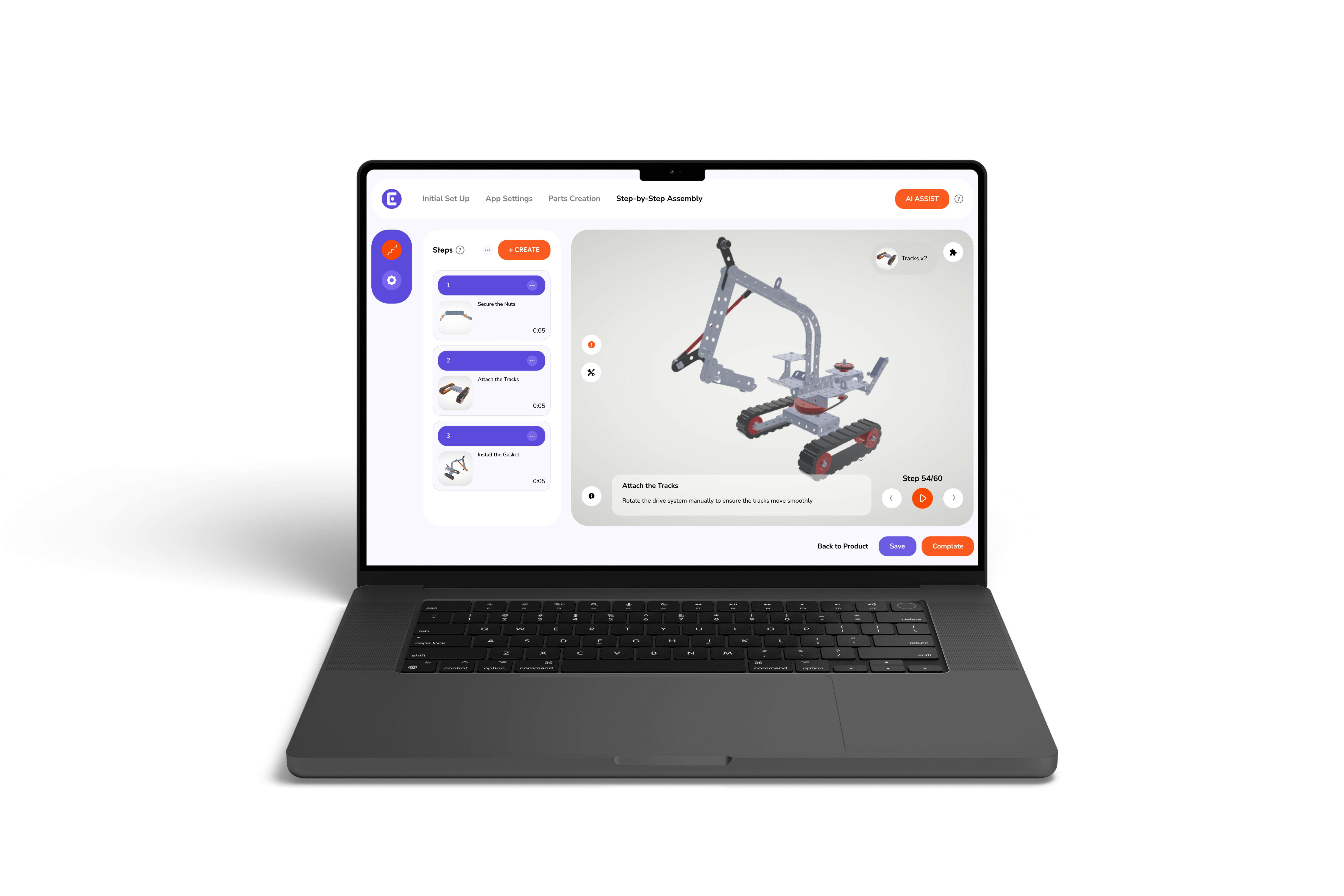
Digital work instructions are step-by-step guides delivered in a digital format to help employees perform tasks accurately and consistently. Unlike traditional paper manuals, digital instructions can include interactive elements, images, and a 3D animation feature for visual clarity.
For example, a machine operator can view each step from multiple angles or zoom in to check the exact part placement. This level of clarity ensures fewer errors, faster task completion, and more consistent results across teams. Undoubtedly, digital instructions improve both speed and accuracy compared to static paper-based processes.
Unlike static documents, these instructions are:
In manufacturing environments, work instructions designed this way remove ambiguity. Operators no longer interpret instructions. They follow guided steps that reflect the current standard.
When implemented correctly, digital work instructions deliver clear, measurable advantages across operations:
Paper instructions and PDFs work in controlled environments with stable processes. Modern operations rarely meet that condition.
As complexity increases, traditional instructions introduce risk:
Over time, execution shifts away from standard work. Variation increases quietly, until quality issues or delays surface. Therefore, digital work instructions solve this by centralizing ownership and delivering the same steps, in the same order, to every user.
The real value of digital guidance is control at the task level. Instead of relying on memory or supervision, operators receive clear direction for each step. The system can require confirmation before moving forward. It can also adapt based on input or task conditions.
This approach:
It reflects a broader operational shift from paper to pixels, where instructions become active execution tools rather than passive references.
Not every task needs advanced visuals. However, certain conditions strongly benefit from digital formats.
For tasks where order and orientation matter, visuals reduce hesitation. This is where 3D work instructions outperform text-heavy documents.
When KPIs matter, visibility matters. Digital systems capture execution data that support improvement and accountability.
Traditional training depends on shadowing and supervision. This approach consumes time and does not scale well. Digital work instructions support task-based learning. New hires follow the same guided steps as experienced operators. Visual formats reduce the learning curve.
This results in:
Tools like 3D interactive step-by-step guides allow operators to understand the task before acting, which builds confidence early.
The difference is not just digital versus paper. It is guidance versus interpretation.
This comparison often comes up when teams assess paper instructions vs digital instructions. The deciding factor is execution consistency.
Unclear instructions often lead to mistakes, especially in tasks involving motion, part orientation, or complex assemblies. Digital work instructions with visual guidance remove this guesswork, guide operators step-by-step, and ensure consistent execution.
When comparing 3D vs. 2D assembly instruction manuals, interactive 3D formats consistently reduce errors and help teams complete tasks faster. That’s why many organizations adopt 3D assembly manuals for maintenance or complex assembly tasks.
By combining visuals with structured digital guidance, teams can perform work accurately, maintain quality, and reduce reliance on memory or verbal instructions.
If you’re looking at how to make the move to paperless work instructions, the following steps can help you get the most value from digital guidance:
Digital work instructions are no longer just a replacement for paper manuals; they are becoming a central part of how organizations manage workflows, train operators, and ensure consistent execution. As manufacturing and operational environments grow more complex, companies increasingly rely on interactive 3D work instructions and step-by-step digital guidance to reduce errors, speed up training, and maintain quality across teams and sites.
For organizations looking to streamline operations and make the transition seamless, Easemble provides a complete solution. With interactive 3D guides and real-time updates, Easemble helps teams implement digital work instructions effectively, which reduces errors, improves training, and keeps workflows consistent across shifts and locations.
Digital work instructions are transforming the way organizations operate. By replacing static manuals with interactive, step-by-step guidance, they reduce errors, improve consistency, and speed up training. Real-time updates, visual instructions, and centralized management ensure that every team member performs tasks accurately, no matter the location or complexity.
Organizations that embrace this shift not only streamline workflows but also help their teams to work confidently and consistently, which paves the way for safer, faster, and more reliable production.