July 16, 2026
The Future of Product Documentation: Interactive Digital Manuals
.png)

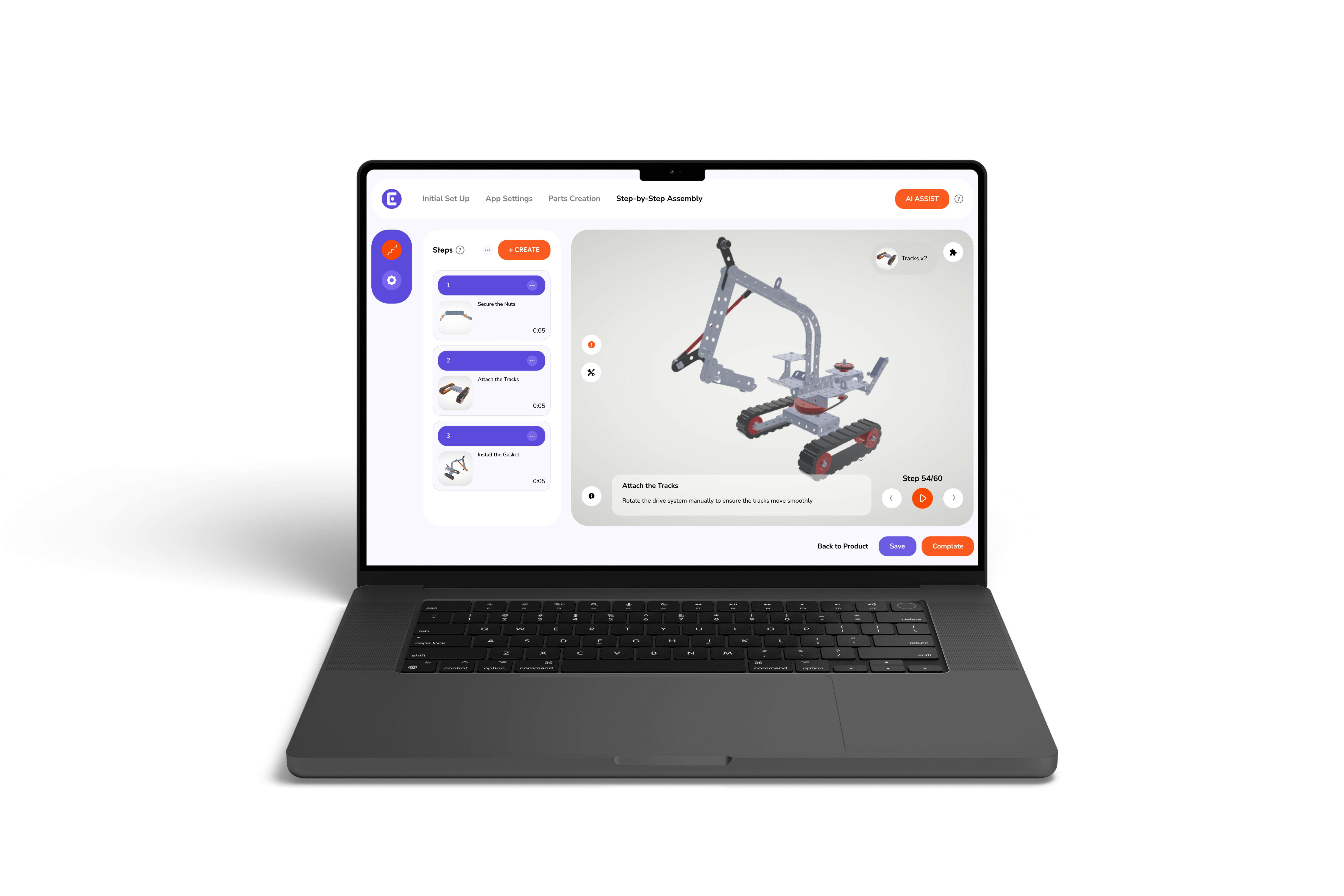
Interactive digital manuals replace static paper instructions with 3D step-by-step guides, helping manufacturers dramatically reduce product returns, cut printing costs, and eliminate customer setup confusion through real-time updates.
Most product returns have nothing to do with the product. They have everything to do with the manual that came with it. Somewhere between the factory and the customer's living room, a perfectly good item turns into a pile of confusing parts, all because the instructions couldn't keep up with how complicated products have become.
That gap is exactly why documentation is changing shape right now. Interactive digital manuals are replacing static booklets with guides that show a step instead of describing it, and adjust to the person following along instead of demanding they adjust first.
It's a small shift on paper, but it changes how customers feel about everything they unbox, assemble, and use. Industry research shows that product returns cost U.S. retailers an estimated $849.9 billion in 2025, with many "No Fault Found" returns stemming from setup and instruction issues rather than product defects.
Products have gotten more complex. Manuals mostly haven't. A printed booklet can't rotate a part so you see the back side. It can't zoom in on a tricky connector. It definitely can't update itself when a part gets redesigned six months after the manual gets printed.
Here's the real cost of that gap:
None of this is really about the product itself. It's about the documentation not keeping pace with it. This is where digital instruction manuals start making a real difference, because they can be corrected, translated, and improved without a single page being reprinted.
It's a fair question, and the term gets used loosely. So, what's the difference between a manual that's simply been converted to a PDF and one that's genuinely interactive?
A true interactive manual lets the reader control the experience. They can rotate a 3D model, tap a part to see just that step, skip ahead if they already know a section, or switch languages without downloading a separate file.
In short, digital product documentation stops being a document you read from top to bottom and becomes something you use, almost like a tool sitting next to you while you work.
That distinction matters. A scanned PDF is still static, even if it lives on a screen. Real interactive manuals respond to the person using them.
This is probably the biggest shift happening right now. Manufacturers already have 3D models of their products sitting in design software. The question became: why not use those same files to guide the customer, instead of building a separate set of flat illustrations from scratch?
That's the idea behind 3D product documentation software. It takes the model that already exists and turns it into something a customer can explore, step by step, from any angle. Here's how that stacks up against the traditional approach:
The benefits of 3D interactive product manual formats go beyond fewer support calls, too. Manufacturers get a clearer picture of exactly where customers hesitate or repeat a step, which is information a paper manual could never hand back.
Consumer electronics and industrial equipment carry a particular kind of pressure. These products often involve wiring, calibration, or sequencing that has to happen in the right order. Get one step wrong and the whole unit might not power on.
A flat diagram genuinely struggles here. But an interactive guide can:
For technical products especially, documentation isn't a nice add-on. Why tech products need better installation instructions comes down to one thing: it's part of whether the product works as promised on day one.
There's also a quieter shift happening, and it's less about flashy 3D visuals and more about how instructions get delivered day to day.
Warehouses, installers, and field technicians have relied on printed binders for years. Increasingly, they're switching to digital work instructions instead, guides that live on a phone or tablet and update the moment a process changes.
How to make the move to paperless work instructions usually starts small. A single product line moves to digital first; teams see fewer errors and faster onboarding, and the rest of the catalog follows. It's rarely an overnight switch, and that's fine. The point is the direction, not the speed.
So, what does all this add up to, practically speaking? A few things, on both sides of the relationship.
For manufacturers:
For customers:
Together, these outcomes are why more manufacturers are treating documentation as a genuine part of the product experience, not an afterthought tucked into the box.
Choosing between different product documentation solutions usually comes down to one question: does this actually reduce friction for the person on the other end, or does it just look modern on paper?
We've spent a lot of time thinking about this exact problem, mostly because we kept hearing the same story from manufacturers: a great product, undone by a confusing setup experience. That's the gap we built Easemble to close.
We take the 3D files manufacturers already have, whether from SolidWorks, SketchUp, or a handful of other modeling tools, and turn them into guides customers can actually follow. Once a manual is built, it publishes across web, mobile, and PDF at the same time, so nobody's stuck maintaining five separate versions of the same instructions.
Documentation used to be the part of the product nobody thought much about, right up until it became the reason someone called support or left a one-star review. That's changing now.
Static paper manuals are giving way to interactive, on-screen guides, and the 3D files manufacturers already have are doing double duty as customer-facing instructions. Across technical and industrial products alike, paperless, on-demand formats are quickly becoming the norm rather than the exception.
None of this means the manual has to be flashy. It just has to work the way the product does, clearly, without making someone guess. If your product's assembly or setup process still lives entirely on paper, it might be worth asking what an interactive version could catch that the current one doesn't.
Paper manuals are static, can't zoom or rotate 3D models, and quickly become outdated when product specs change.
Interactive manuals allow users to rotate 3D models, tap specific parts, skip steps, and easily switch languages.
They clarify complex setup steps visually, preventing "No Fault Found" returns caused by customer assembly and instruction confusion.
Manufacturers convert their existing 3D CAD files into interactive, step-by-step guides using software tools like Easemble.
Paperless instructions lower printing costs, publish instant updates across devices, and provide analytics on where users get stuck.