Why Industrial Equipment Installation Still Runs on Paper
.png)

Walk into most equipment manufacturers' engineering departments, and you'll find CAD models, simulation software, and revision histories tracked to the day. Walk out to where their equipment actually gets installed, and you'll often find a printed binder, a PDF someone downloaded months ago, or a technician working from memory because that's simply how it's always been done.
That gap is not a coincidence. It's a natural byproduct of how equipment companies grow. The engineering side of the business has strong incentives to modernize: faster design cycles, fewer prototypes, and better simulation. Installation documentation doesn't have the same forcing function. A manual gets written once, it works well enough, and nobody revisits it until something goes wrong in the field.
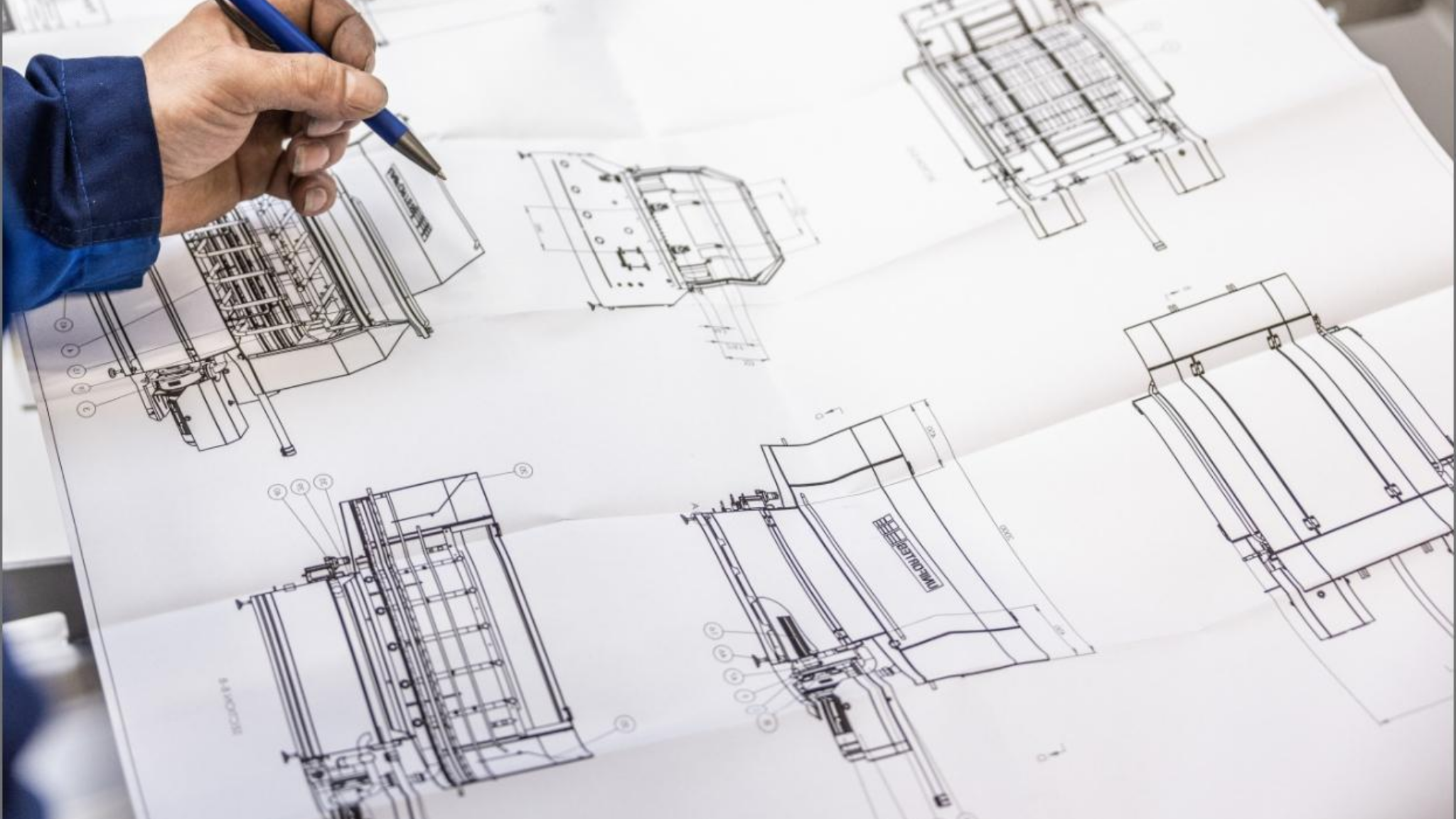
Industrial equipment has become more configurable, more automated, and more variant-heavy than it was even a decade ago. A single product line might now ship in a dozen configurations, each with slightly different components, wiring, or mounting requirements. Meanwhile, the documentation describing how to install that equipment often hasn't kept pace. It's still a PDF, a printed manual shipped in the crate, or a set of engineering drawings a technician has to interpret on-site.
None of this means paper manuals are inherently bad. A well-written manual for a single, stable product can work fine for years. The problem shows up specifically at scale: multiple configurations, frequent engineering changes, and installation happening in dozens of different facilities by technicians with varying levels of familiarity with that particular machine.
For manufacturers dealing with increasingly complex products, 3D product documentation can provide a more visual way to present technical information and installation guidance.
Consider a common scenario. An equipment manufacturer redesigns a mounting bracket to improve durability. Engineering updates the CAD model and issues a new revision. The installation manual, however, was generated as a static PDF months earlier and distributed to field technicians and installation partners. A technician working from an older copy follows the original mounting sequence, uses the original bracket orientation, and only discovers the mismatch once the part doesn't fit as expected.
Nobody made a mistake here in the way people usually mean it. The technician followed the instructions they were given. The instructions just weren't the current ones, and there was no reliable way for the technician to know that.
This kind of gap is common wherever documentation is distributed as a file rather than maintained as a living reference. Every printed copy and every downloaded PDF becomes a snapshot that starts going stale the moment engineering makes its next change.
A machine builder rarely installs its own equipment everywhere it ships. Distributors, integrators, in-house facility teams, and third-party technicians all end up responsible for installation at some point, often with no direct line back to the engineering team that designed the equipment.
A single static manual, written for a generic scenario, has to somehow serve all of these situations. It rarely does. Technicians end up calling engineering or support with questions the manual should have answered, and the manufacturer absorbs that cost in support time even after the sale is technically complete.
In many equipment companies, a small number of senior technicians or field engineers know the installation process cold, including all the exceptions and edge cases that never made it into the written manual. New technicians learn by shadowing them. That works when the company is small and installation volume is low.
It stops working as the company scales. Every new install that depends on a specific person's availability is a bottleneck, and every senior technician who leaves takes undocumented knowledge with them. The documentation that exists on paper is often a simplified version of what actually needs to happen, with the real expertise living entirely in people's heads.
These gaps show up as concrete, measurable problems.
Installation mistakes and incorrect component placement happen when instructions don't match the equipment actually in front of the technician. Fixing a misconfigured install after the fact almost always takes longer and costs more than getting it right the first time, and it can delay commissioning on a project where the client is already expecting the equipment to be operational.
Training becomes harder to scale. New technicians who have to be personally walked through installation by a more senior colleague create a dependency that doesn't grow with the business. As order volume increases, that bottleneck gets tighter rather than looser.
Support calls increase. Every ambiguous step in a manual is a potential phone call to engineering or technical support, pulling those teams away from other work. Over time, this becomes one of the more expensive, least visible costs of documentation debt because it's distributed across many small interruptions rather than one obvious failure.
For manufacturers dealing with complex assembly processes, interactive 3D assembly manuals can make individual installation steps easier to follow by showing components in a visual, three-dimensional context.
Version-control problems compound the longer a product line stays in production. Multiple manual versions circulating for the same equipment, with no reliable way to confirm which one a given technician is holding, make consistent quality difficult to guarantee across installations.
A few practical indicators tend to show up before these problems become serious:
Any single item here might just be a rough patch. Several together usually mean the documentation process hasn't scaled with the product line.
Manufacturers who solve this well tend to converge on a few shared principles, regardless of the specific equipment they build.
A single current version, not a distributed one. Instead of PDFs and printed copies that need to be manually replaced, the instructions live in one place that updates when the product does. When engineering issues a revision, the installation documentation reflects it immediately rather than after a separate publishing cycle. This focus on maintaining useful, controlled documented information is also consistent with the guidance in ISO 10013:2021.
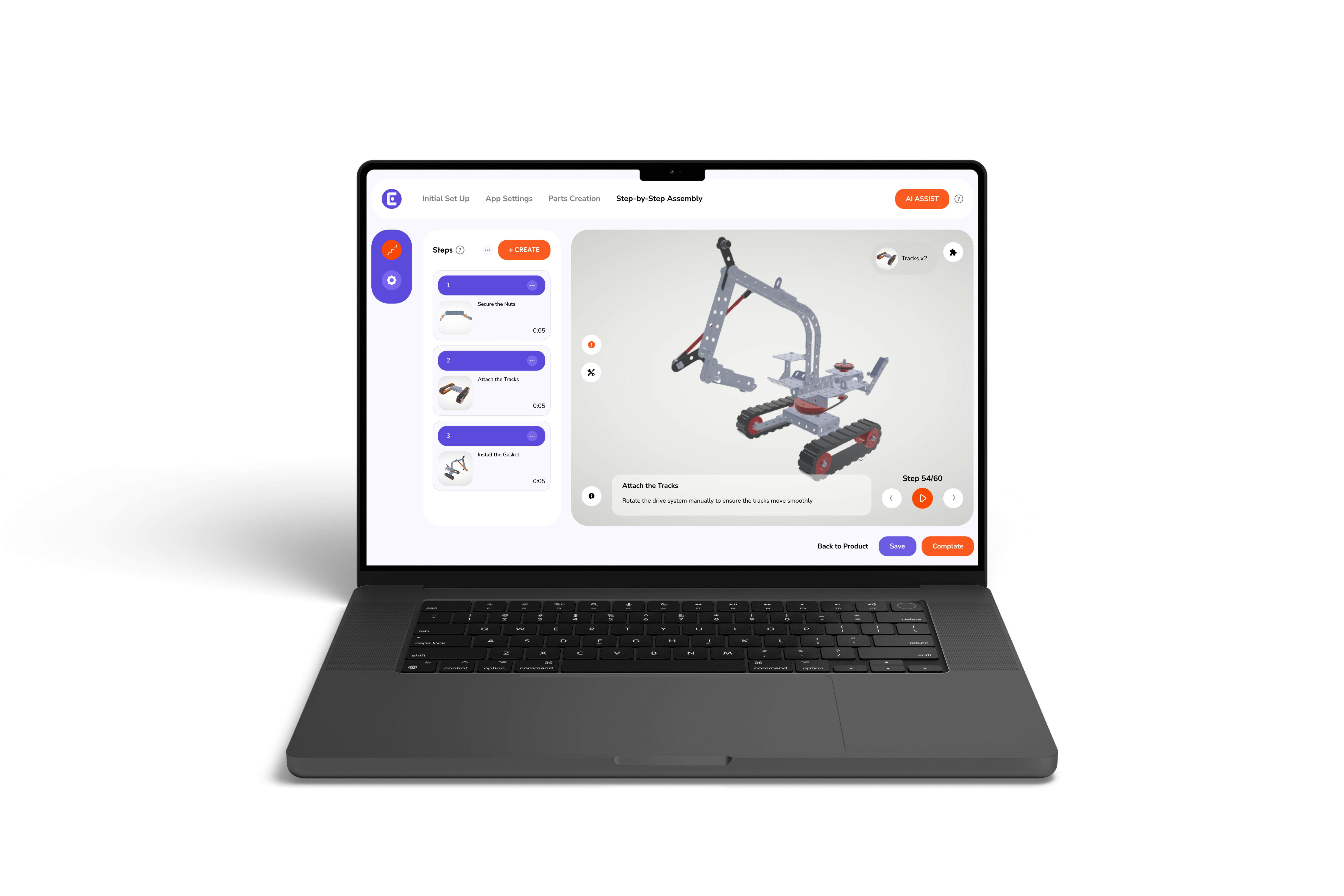
Instructions built for the technician's actual context. A flat diagram or dense paragraph asks a technician to translate two-dimensional information onto a three-dimensional machine in front of them. Being able to see how a component fits from the angle they're actually working at removes a layer of interpretation that text and static images can't. Digital work instructions can make that information available in a format designed to be used during the work itself.
A documentation process that doesn't require a specialist every time. If updating a manual after an engineering change takes days of formatting and redistribution work, the documentation process itself becomes a bottleneck. The goal is a workflow where a revision reaches the field quickly without becoming its own project.
This is the direction more equipment manufacturers and machine builders are moving toward: replacing static PDFs and printed manuals with digital work instructions that stay current and travel with the technician on a phone or tablet.
Easemble's industrial equipment assembly solutions are built around this specific problem. Manufacturers turn existing 3D models into interactive assembly and installation guides that technicians can rotate, zoom into, and step through on-site, rather than interpreting a flat diagram.
The benefit isn't simply putting an existing manual on a screen. The larger change is making installation guidance easier to access and maintain as the equipment itself changes.
None of this replaces sound engineering or well-trained technicians. What it changes is how reliably the documentation itself stays accurate as the product and the installation environment change, which is precisely where most manufacturers report the process breaking down.
Trying to overhaul every manual at once tends to stall. A more realistic starting point looks like this:
Start with the product line generating the most support calls or the most inconsistent installation outcomes. It's the clearest signal of where documentation is falling short, and it gives you a contained place to prove out a better process before rolling it out further.
Involve the technicians who actually install the equipment, not just the engineers who design it or the writers who document it. They know exactly where the current manual falls short, often more precisely than anyone else in the organization.
Build revision control into the process from the outset, so that an engineering change reaches the field automatically rather than depending on someone remembering to redistribute an updated file.
Equipment companies have gotten good at treating engineering as a discipline worth investing in carefully. Installation documentation deserves the same level of intentional design, not because paper manuals are wrong, but because the way most companies currently maintain them doesn't hold up once the product line, the technician pool, and the number of installations start to grow.
An effective manual should cover the components being installed, the correct installation sequence, relevant fastening or torque requirements, safety information, and any steps that change between equipment configurations. It should also identify the product revision it applies to, especially when the equipment has gone through engineering changes.
The instructions can stop matching the equipment in front of the technician. A revised bracket, changed component, or updated installation sequence may lead to rework or a support call even when the technician followed the manual correctly. The problem is that the manual was no longer current.
Not for every situation. A PDF can work well for a stable product with a straightforward installation process. Digital work instructions become more useful when equipment has multiple configurations, engineering changes happen regularly, or technicians need visual guidance while they work.
Start by reducing the number of versions in circulation. A centrally managed source gives the manufacturer one clear current version instead of leaving technicians to choose between several PDFs or printed copies. Revision control should also be connected to the engineering change process so documentation is updated when the equipment changes.
Yes, particularly when the installation involves components that are difficult to understand from a flat drawing. Seeing the relationship between parts in three dimensions can make positioning and assembly easier to understand, especially for technicians who haven't worked with that equipment configuration before.
Look at what is happening during installation. Frequent support calls, multiple manual versions, repeated errors around the same steps, and extensive shadowing for new technicians are all signs that the existing documentation may no longer be keeping up with the product or installation volume.