January 8, 2026
How 3D Work Instructions Support Workers? An Overview

.png)

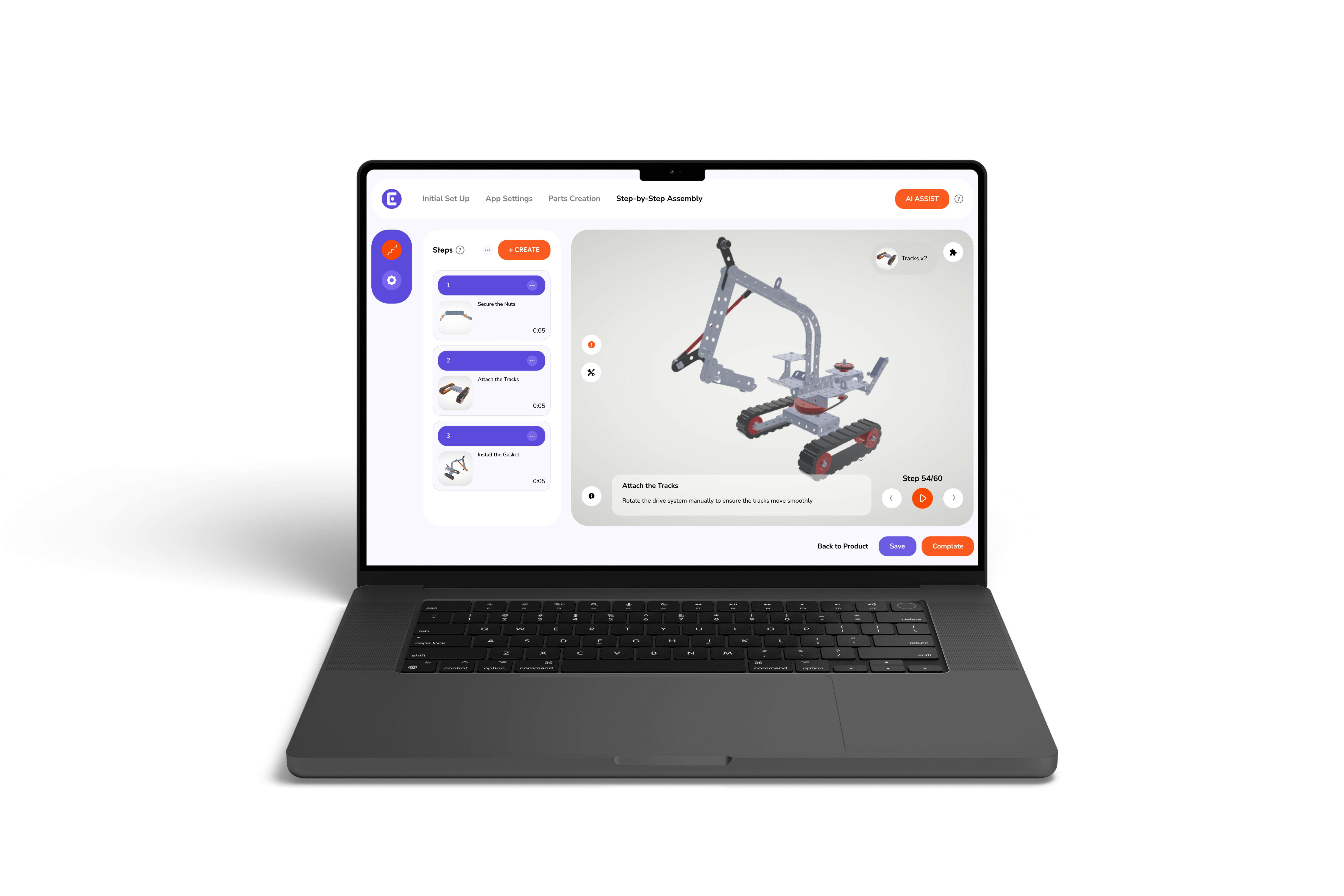
3D work instructions are digital guides that use three-dimensional visuals to show how tasks should be completed. Unlike traditional manuals that rely on text and flat images, 3D instructions allow workers to see objects and processes from every angle. These instructions often include animations, exploded views, and interactive elements, which help workers understand complex steps more easily, illustrating how 3D work instructions support workers in performing tasks accurately and efficiently. Essentially, they turn static instructions into dynamic, visual experiences that are easier to follow.
Simply put, 3D instructions make learning and performing tasks faster, clearer, and more accurate than traditional manuals.
Companies looking to streamline processes can learn more about how to make the move to paperless work instructions, replacing traditional manuals with interactive digital guides.
3D work instructions influence how teams learn, work, and perform by enhancing clarity, strengthening training, improving efficiency, and supporting digital transformation.
One of the benefits of a 3D interactive product manual is that they make complex tasks easier to understand. Unlike traditional manuals with dense text or flat diagrams, 3D instructions visually guide workers through every step of a process.
3D work instructions are a type of digital work instructions that use interactive visuals to guide employees step by step. These 3D instructions break down complicated procedures into simple, easy-to-follow steps. For example, assembling a machine part can be shown in a rotating 3D model, highlighting exactly where each component fits. This demonstrates how 3D interactive instructions simplify product assembly, helping workers of all skill levels complete their tasks accurately. Workers can see the task from multiple angles, making it much easier to grasp than static images or written directions.
Traditional instructions often leave room for interpretation, which can lead to mistakes. With 3D instructions, workers see exactly what needs to be done, minimizing misunderstandings. This reduces costly errors, improves quality, and saves time on corrections.
3D work instructions are especially useful for teams with diverse experience levels. Even new or less skilled employees can follow along easily because the visuals show the process clearly. Experienced workers also benefit, as the instructions provide a quick reference without needing to read long manuals.
Overall, 3D instructions make work more intuitive, reduce mistakes, and ensure everyone on the team understands tasks the same way.
3D work instructions are not just useful for day-to-day tasks—they are a powerful tool for training and developing worker skills. They make learning new processes faster, easier, and more effective, showing organizations how 3D assembly instructions enhance training and reduce errors while allowing employees to learn at their own pace.
New employees often struggle to understand complex workflows using traditional manuals. 3D instructions simplify this by showing each step clearly, allowing new hires to grasp tasks quickly. This reduces training time and helps employees become productive faster.
Supervisors don’t have to be present at every step because 3D instructions guide workers in real time. The interactive visuals show exactly what to do, which helps employees complete tasks correctly on their own. This frees supervisors to focus on other priorities.
3D work instructions let employees learn at their own pace. Workers can pause, rewind, or explore each step as needed. This immersive, hands-on approach boosts confidence, improves skill retention, and reduces reliance on lengthy classroom-style training.
By supporting training and skill development, 3D instructions empower workers to perform confidently and efficiently while promoting continuous learning.
3D work instructions play a major role in helping workers complete tasks faster and with fewer errors, directly improving efficiency and productivity.
Mistakes in manual processes can lead to costly downtime and delays. 3D instructions reduce errors by clearly showing the correct procedure for each task. Workers can follow step-by-step visuals, which help prevent rework and keep operations running smoothly.
Unlike traditional manuals, 3D instructions can guide employees in real time. Workers can check each step visually as they work, ensuring accuracy and reducing the need for repeated corrections. This real-time guidance streamlines workflows and improves overall output.
In industries that use lean or agile practices, efficiency is critical. 3D instructions help standardize processes, reduce waste, and ensure consistency across tasks. Teams can work faster without compromising quality, which aligns perfectly with lean and agile principles.
By improving accuracy, reducing errors, and streamlining workflows, 3D work instructions make operations more productive and efficient.
3D work instructions are most effective when combined with modern technologies, making them more interactive, accessible, and adaptable to today’s workplaces.
Augmented Reality (AR) and virtual reality (VR) allow workers to experience 3D instructions in an immersive way. For example, AR can overlay step-by-step guidance directly onto real-world equipment, while VR can simulate complex tasks in a safe, controlled environment. This hands-on experience improves understanding and retention.
3D instructions can be easily accessed on smartphones and tablets, which allows workers to follow step-by-step guidance anytime, anywhere. This flexibility ensures employees can perform tasks accurately even when supervisors or printed manuals aren’t available.
In modern smart factories, 3D instructions can be integrated with IoT devices and automated systems. Machines can provide real-time feedback to workers, and instructions can update automatically based on equipment status, ensuring tasks are performed correctly and efficiently.
With AR/VR, mobile platforms, and IoT integration, 3D work instructions have become a versatile tool that keeps workers informed, engaged, and productive.
In conclusion, 3D work instructions transform the way employees learn, perform, and improve skills. By combining interactive visuals with modern technologies like AR, VR, and mobile access, they reduce errors, speed up training, and boost productivity, showing how 3D work instructions support workers in completing tasks accurately and efficiently. They also make complex tasks easier, support continuous learning, and help teams work smarter, safer, and more efficiently every day.