September 5, 2024
The Future of Science Equipment Assembly
Technology like 3D models and AR is simplifying complex science equipment setups, improving accuracy and efficiency in labs. Easemble™ leads the way!
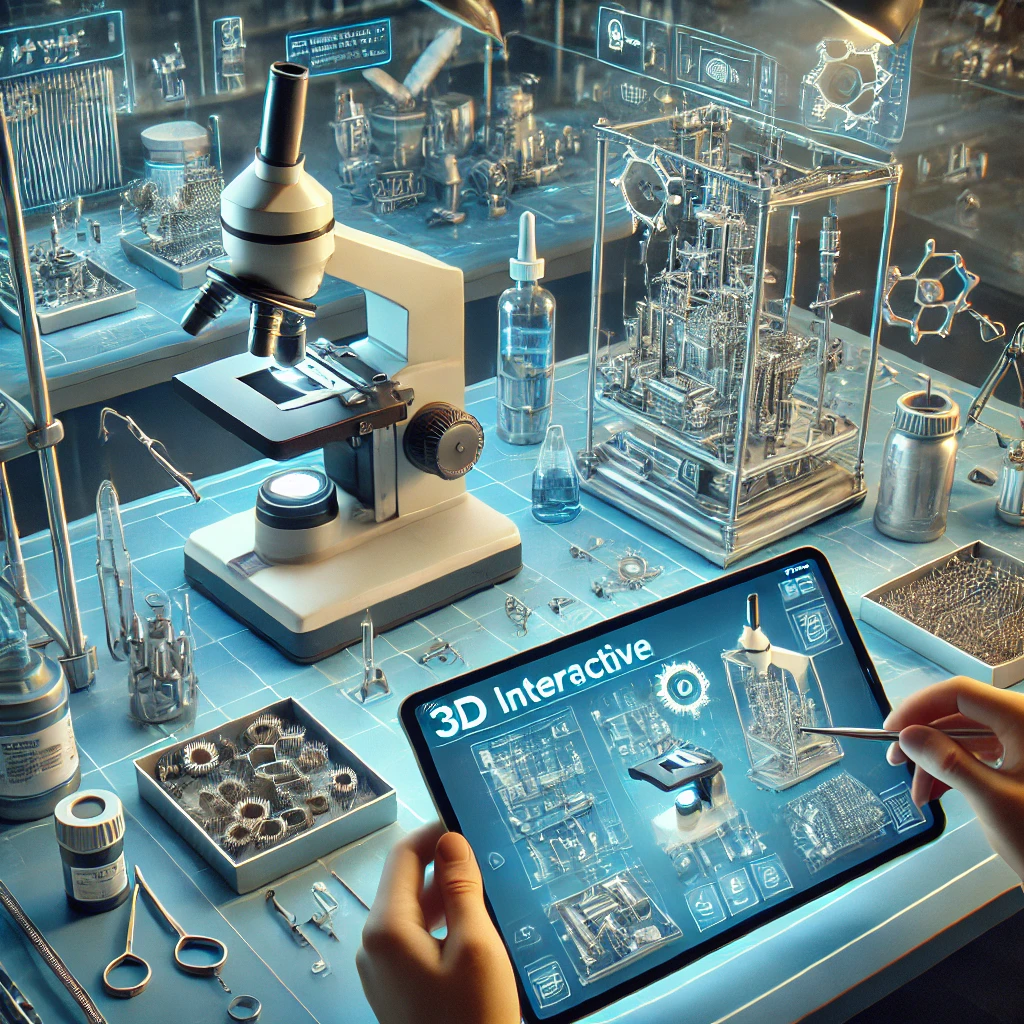
.png)

Setting up scientific equipment has traditionally been a time-consuming, complex task, often requiring expert knowledge. From intricate lab setups to high-tech research devices, the process of putting everything together can be a daunting challenge. However, with the rise of interactive technologies and innovative assembly solutions, the future of science equipment setup is becoming much simpler. In this blog, we explore how advances in 3D modeling, augmented reality, and smart technology are transforming how we approach science equipment assembly.
Scientific equipment is often highly specialized and complex, requiring precise assembly to function correctly. Whether it's a spectrometer, a microscope, or a chemical analysis system, each component needs to be positioned and connected accurately to ensure optimal performance. Traditionally, this process involved poring over dense instruction manuals filled with diagrams and technical jargon that could be difficult to interpret.
Errors in assembly can lead to miscalibrations, inaccurate results, or even damage to expensive equipment. In research environments, where precision is key, any setup mistake can mean lost time, compromised experiments, and frustration for scientists and technicians alike.
Thanks to advancements in 3D modeling, augmented reality (AR), and machine learning, assembling complex scientific devices is becoming more user-friendly. Here's how these technologies are changing the game:
The impact of these technologies on scientific environments is profound, offering several benefits:
One company leading this innovation is Easemble™, which has revolutionized the assembly of complex equipment in various industries, including science and research. Easemble™ offers a platform that integrates 3D interactive models, AR guides, and real-time feedback, specifically designed for scientific environments.
By using Easemble™, scientists and lab technicians can quickly and accurately set up their equipment, regardless of complexity. From microscopes to DNA sequencing machines, the platform simplifies the entire process, allowing more focus on research and less on assembly.
As technology continues to evolve, the once-complex task of setting up scientific equipment is becoming more intuitive and efficient. 3D modeling, AR, and machine learning are transforming how we approach assembly, helping researchers spend less time setting up and more time making discoveries.
In the near future, setting up advanced lab equipment could be as easy as following a virtual guide — ensuring a future of effortless science and enhanced research productivity.
Explore Easemble™ for your science lab and experience a smarter way to assemble your equipment.
.png)