June 23, 2026
Why Global Distribution Demands Universal Product Manuals

.png)

Global brands need universal product manuals because customers across different markets must be able to understand and assemble products without language barriers or confusion. Digital and visual-first manuals, especially 3D interactive guides, help reduce support issues, returns, and errors while ensuring a consistent post-purchase experience worldwide.
Ever unboxed a product, opened the manual, and felt like you were looking at random symbols instead of instructions?
You are not alone. Many customers face this moment. The product arrived, the parts are ready, but the assembly guide creates more confusion than confidence.
For global brands, this is a bigger problem than it seems. A product can reach homes and offices across continents, yet the experience can fall apart when customers try to assemble it.
Your product does not just need to travel worldwide. It needs to be understood worldwide.
In this blog, we will explore why traditional manuals struggle in global markets, how digital assembly platforms solve these gaps, and how brands can create smoother post-purchase experiences everywhere.
Global distribution creates a gap that is often missed. Products move across borders with ease, but the instructions inside the box often stay tied to one language, one format, and one way of explaining things. That mismatch is where most confusion begins.
For instance, a CSA Research survey reports that 76% of consumers prefer to access product information in their native language.
A direct translation may make words readable, but it does not always make the process clear. Assembly depends on more than language. It depends on sequence, orientation, and visual logic. If the guide is still a flat booklet, customers can struggle even when they understand the text.
When customers cannot follow the manual, they usually call support, guess, make mistakes, or return the product. None of these outcomes helps the business.
Common fallout includes:
These issues may look small at first, but they grow quickly across regions. That is why the real fix is not just better wording, but a better system for delivering instructions.
Traditional manuals were built for printing, but global commerce now needs systems that can update, localize, and scale easily. That is why many brands are moving from static PDFs and paper inserts to digital instruction manual software and cloud-based platforms.
A paper manual cannot change once printed. If the product updates or a market needs a different language or step order, the guide falls behind. This creates extra work for teams and confusion for customers.
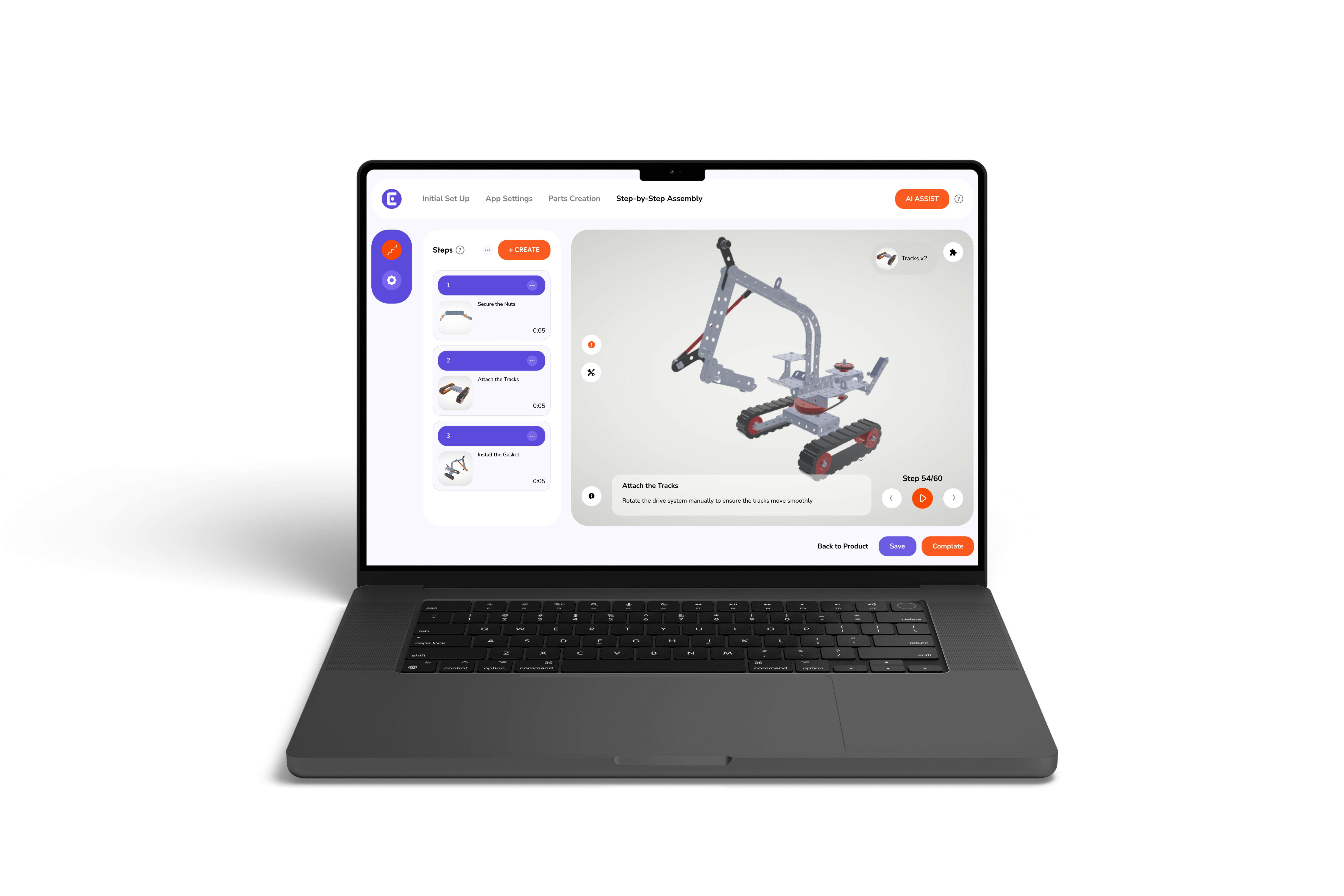
Digital platforms let brands update instructions in one place, manage versions, and serve different markets without reprinting. 3D manuals go further by showing the build visually, allowing users to rotate parts, zoom in, and follow steps more naturally. This reduces dependence on text and improves understanding across languages.
The shift is operational, not cosmetic. When manuals live on a digital system, brands gain control, improve clarity, and reduce avoidable errors across markets.
The fastest way to reduce language barriers is not always more text. In many cases, stronger visuals do the job better. When customers can clearly see what goes where, they rely less on wording and more on understanding the layout.
Exploded views, animated steps, and highlighted parts can communicate across languages more clearly than long written instructions. That is why visual-first documentation works well in global assembly settings.
It still supports local language labels where needed, but most of the clarity comes from the visual flow itself.
A digital assembly platform allows changes to be made quickly when parts or steps change. Updates can go live without reprinting manuals, helping brands stay aligned across markets while still adapting content for local needs.
When instructions are easier to understand, customers are less likely to reach out for basic help. That leads to fewer repeat questions, fewer escalations, and smoother support operations overall.
A strong global assembly strategy needs more than one fix. It has to cover cost, clarity, and consistency. Brands that think only about translation usually miss the bigger picture.
Begin by looking at the cost of confusion.
These answers help identify where improvement is needed first. If one step drives most of the support load, that is usually the best place to fix.
Good global manuals are designed for the user, not just translated for regions. Steps should be grouped clearly, supported with visual markers, and structured so the process feels natural anywhere in the world.
When instructions are spread across files, control is lost. Versions drift, updates get delayed, and consistency breaks down. A centralized system creates a single source of truth for all regions.
This helps global brands keep documentation accurate, reduce errors, and update content without confusion across markets.
Product assembling support is no longer just about delivery. The real challenge is making sure people can actually use the product anywhere in the world. This is pushing instruction systems toward more visual, flexible, and responsive formats.
Assembly is becoming part of the full product experience, not just a post-unboxing step. This matters more for global brands where users have different languages and habits.
Customers want to support that feels clear and relevant, not generic booklets. That could be localized guides, visual walkthroughs, or 3D manuals that are easier to follow in real time.
Brands that treat manuals as part of the experience, not an add-on, tend to build stronger long-term trust. They are not just shipping products globally; they are making them easier to understand everywhere.
Easemble helps brands move from static manuals to interactive assembly experiences. It makes global guides easier to update, localize, and follow. Instead of monolingual printed inserts, instructions become visual and flexible, allowing faster changes without reprinting.
This helps reduce support load, improve clarity after purchase, and keep product guidance consistent across markets. For global brands, it gives more control over how customers understand and use products after delivery.
Global shipping is no longer the difficult part for many brands. The harder challenge is making sure customers in every market can understand, assemble, and enjoy the product once it arrives. That is where paper manuals fall short.
Brands that want to reduce confusion, support costs, and return rates need a better way to guide customers across languages and regions. Easemble helps make that possible with interactive, visual assembly manuals that are easier to update and easier to use. If your product ships worldwide, your instructions should work worldwide too.
Because shipping worldwide is only half the job. If customers cannot understand instructions, they may contact support, return the product, or lose trust in the brand.
Not really. Translation helps, but assembly depends more on visual clarity, step order, and part orientation than words alone.
It allows brands to update manuals quickly, localize content for different markets, and add visual or interactive support that paper cannot offer.
They reduce language dependence by showing the process visually. Users can rotate parts, follow steps easily, and understand the build without relying only on text