June 30, 2026
How Interactive Assembly Instructions Reduce Product Returns and Support Tickets

.png)

The box is open, the parts are sorted, and the customer is already stuck.
When brands try to reduce product returns, they often look at product quality, packaging, or shipping. Yet many returns begin much earlier, during assembly. A confusing instruction guide can make a well-designed product feel frustrating, incomplete, or defective before the customer has even finished building it.
That is why more companies are moving toward interactive product manuals.
In this blog, we will look at how clearer assembly experiences lead to fewer returns, fewer support tickets, and a better experience for both customers and brands. The first place to look is not the warehouse. It is the moment the customer starts building.
Most customers do not open a box expecting problems. They expect a product that works and instructions that help them get started. When the setup process becomes confusing, that expectation begins to break down.
A product can be well-made and still leave a poor impression if the assembly experience feels difficult. One unclear step can lead to missing parts that were never missing, misplaced components, or simple assembly errors that make the product seem faulty.
The customer starts with excitement, but after repeated setbacks, that feeling can quickly turn into regret.
Most people do not give up right away. They go back through the product setup instructions, search online for help, watch videos, or contact support. But when the answers are still unclear, many decide the product is not worth the effort.
In those cases, the return is often driven by confusion rather than a genuine defect. Businesses that want to reduce product returns need to look closely at what happens during those first few minutes of assembly.
That frustration does not stop with the customer. It often creates a second problem behind the scenes, one that support teams deal with every day.
Most customers who get stuck during assembly do not request a return right away. They look for help first, which often means contacting support. When the same instruction causes confusion across many orders, support teams end up answering the same questions repeatedly.
Common support requests often include:
When those questions repeat across hundreds of customers, support volume grows quickly.
Every support ticket adds work, slows response times, and increases costs. That is why customer support reduction has become a priority for many product teams.
In fact, one industry analysis found that for products requiring assembly, about 40% of support contacts and product returns can be traced back to poor instructions. Brands trying to reduce product returns often discover that better assembly instruction software solves both problems by preventing confusion before it starts.
The next question is simple: what kind of guidance helps customers get it right the first time?
Most people do not study an instruction manual before they start building. They assemble as they go, checking the instructions only when they need help.
For most users, seeing a step is easier than reading a long explanation. A clear visual removes doubt faster than text alone. That is one reason digital assembly manuals often feel easier to use than traditional paper guides.
Why do 3D assembly instructions work so well? They show how parts fit together, which direction components should face, and what comes next.
Once the user experience improves, the next step is understanding the software that helps brands create these clearer assembly journeys in the first place.
Clear assembly experiences do not happen by accident. Behind them is a system that helps teams create instructions people can actually follow.
Assembly guide software helps companies create, update, and manage instructions more effectively. The goal is not prettier manuals. It is helping customers complete setup with fewer questions.
Some of the biggest advantages include:
Many brands focus on packaging or product quality when they want to reduce product returns. Those factors matter, but clear instructions matter too.
Better guidance often leads to:
The benefits of 3D assembly instructions become even clearer when combined with interactive product manuals that help customers complete setup with less frustration.
Moving on, let's look at how Easemble puts these ideas into practice.
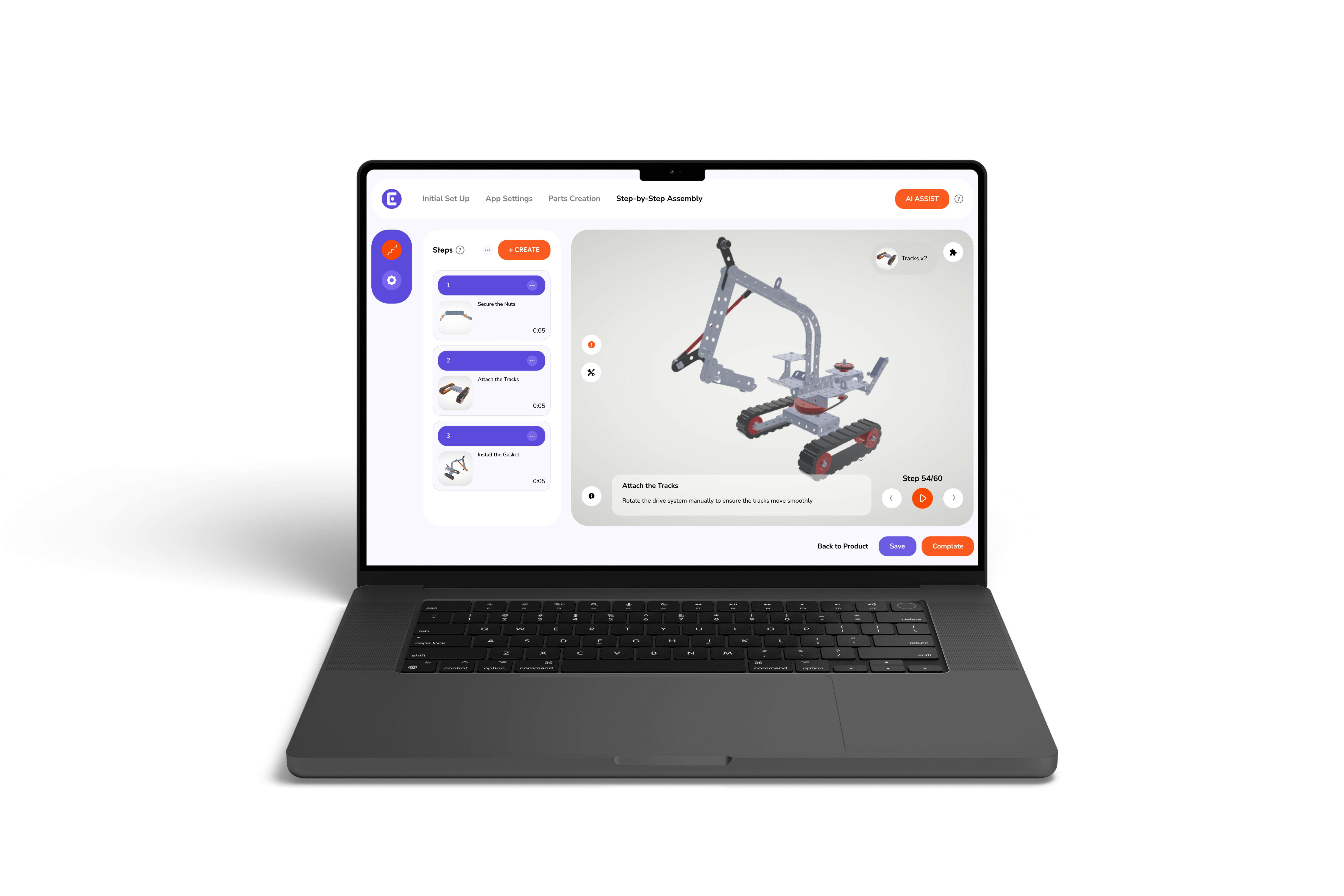
Easemble helps brands replace static paper instructions with digital assembly manuals that are easier to follow. As an assembly instruction software platform, it helps teams create interactive product manuals that guide customers through setup with less confusion and fewer mistakes.
Whether the product is simple or complex, Easemble makes instructions easier to build, update, and manage. When customers can complete assembly without getting stuck, businesses are more likely to reduce product returns while also lowering support demand.
Now, let's compare traditional instructions and interactive guidance side by side.
The difference between good and bad instructions is not always obvious until you compare the outcomes side by side.
When customers can complete assembly with fewer questions and less confusion, brands are more likely to reduce product returns while also achieving meaningful customer support reduction.
With the comparison in mind, let's answer a few common questions that often come up when companies consider improving their assembly experience.
A product does not earn trust when it leaves the warehouse. It earns trust when the customer successfully puts it together. Poor instructions create confusion, support tickets, and returns that could have been avoided. Clear visual guidance helps people complete the job with confidence and helps brands like yours reduce product returns before they happen.
If your team is still relying on static manuals, it may be time for a better approach. Easemble helps brands create interactive product manuals that make assembly easier, reduce support demands, and improve the customer experience from the very first step.
Yes. Clear guidance helps customers complete assembly successfully, which can reduce product returns caused by confusion rather than product defects.
No. 3D assembly instructions are helpful whenever parts look similar, orientation matters, or users need extra visual clarity.
Because many support tickets come from the same assembly questions. Better instructions save time for both customers and support staff.