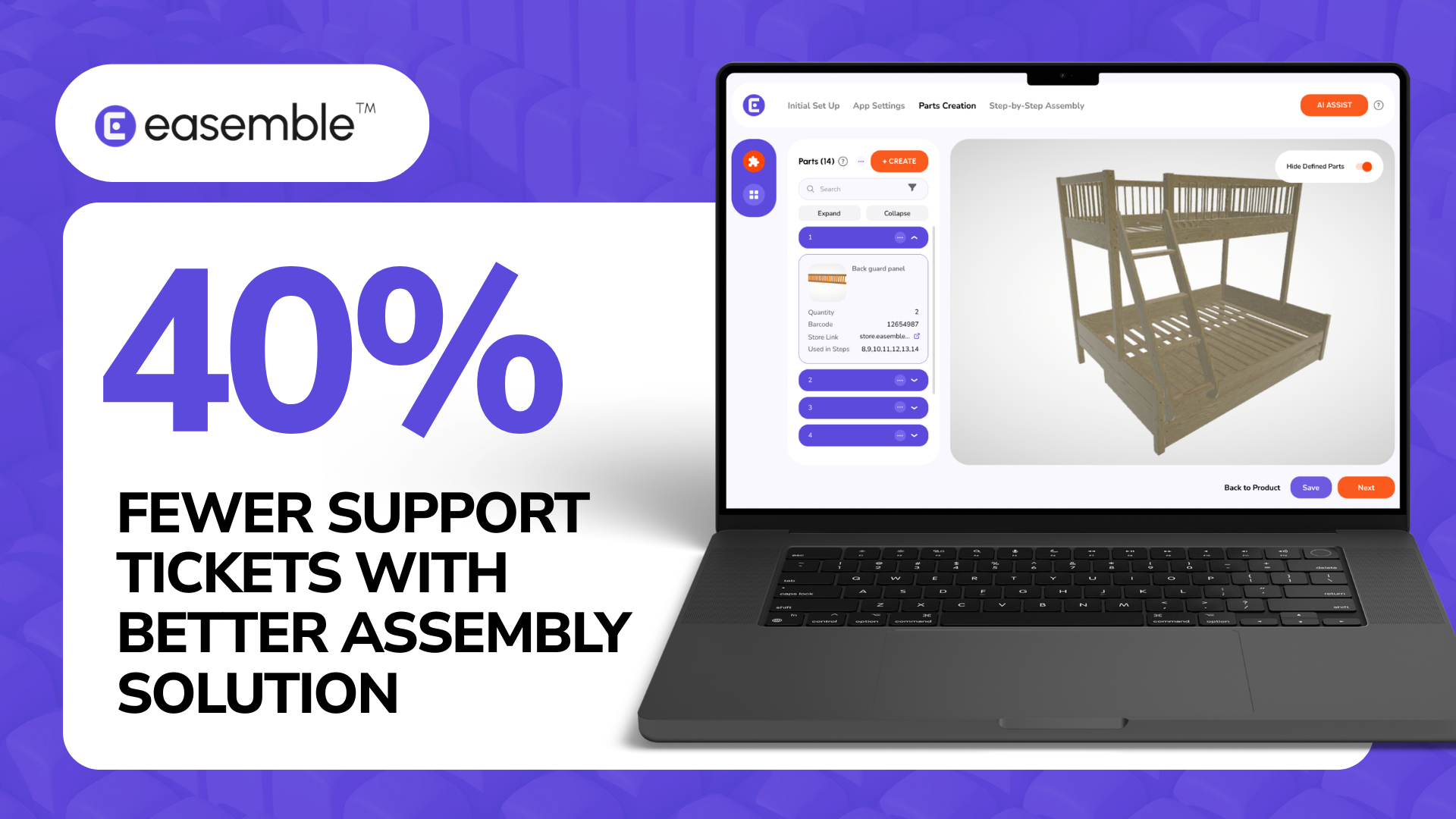
The Manufacturer’s Playbook: Reducing Support Tickets by 40% with Innovative Assembly Solutions
Customer support spikes aren’t just a service issue, they’re an instruction problem. Discover how digital, interactive assembly solutions reduce friction, lower support costs, and improve the overall product experience.
The Manufacturer’s Playbook: Reducing Support Tickets by 40% with Innovative Assembly Solutions
In the world of B2B manufacturing and consumer electronics, customer support is often treated as a necessary cost center. Every new product launch is followed by a predictable surge in support tickets, phone calls, and “how-to” inquiries.
However, as the industry evolves, a different perspective is emerging. High support volume is not just a customer issue, it is often an instructional failure.
Traditional manuals, whether paper or PDF, are static. They provide “dead information.” When users encounter friction, their only option is to reach out for help. This is why digital, interactive, and data-driven assembly solutions are becoming essential to modern operational efficiency.
The True Cost of a “Simple” Support Call
The financial impact of support is significant. In 2026, the average cost of a single human-to-human support interaction ranges from $18 to $45.
For a company shipping 50,000 units, even a 10% support rate results in a substantial, avoidable cost. Beyond direct expenses, there are additional impacts:
Negative sentiment: Customers reaching out are already frustrated
Review impact: “Hard to assemble” remains a common theme in low ratings
Return risk: Frustrated users are significantly more likely to return products
Innovative assembly solutions do more than improve documentation. They reduce the need for support interactions altogether.
Breaking the Cognitive Ceiling
Customers do not struggle because they lack ability. They struggle because traditional documentation creates a cognitive ceiling.
Static manuals rely on 2D representations of 3D objects. This forces users to mentally rotate and interpret each step. As complexity increases, this mental effort becomes overwhelming.
Modern assembly solutions remove this limitation by providing:
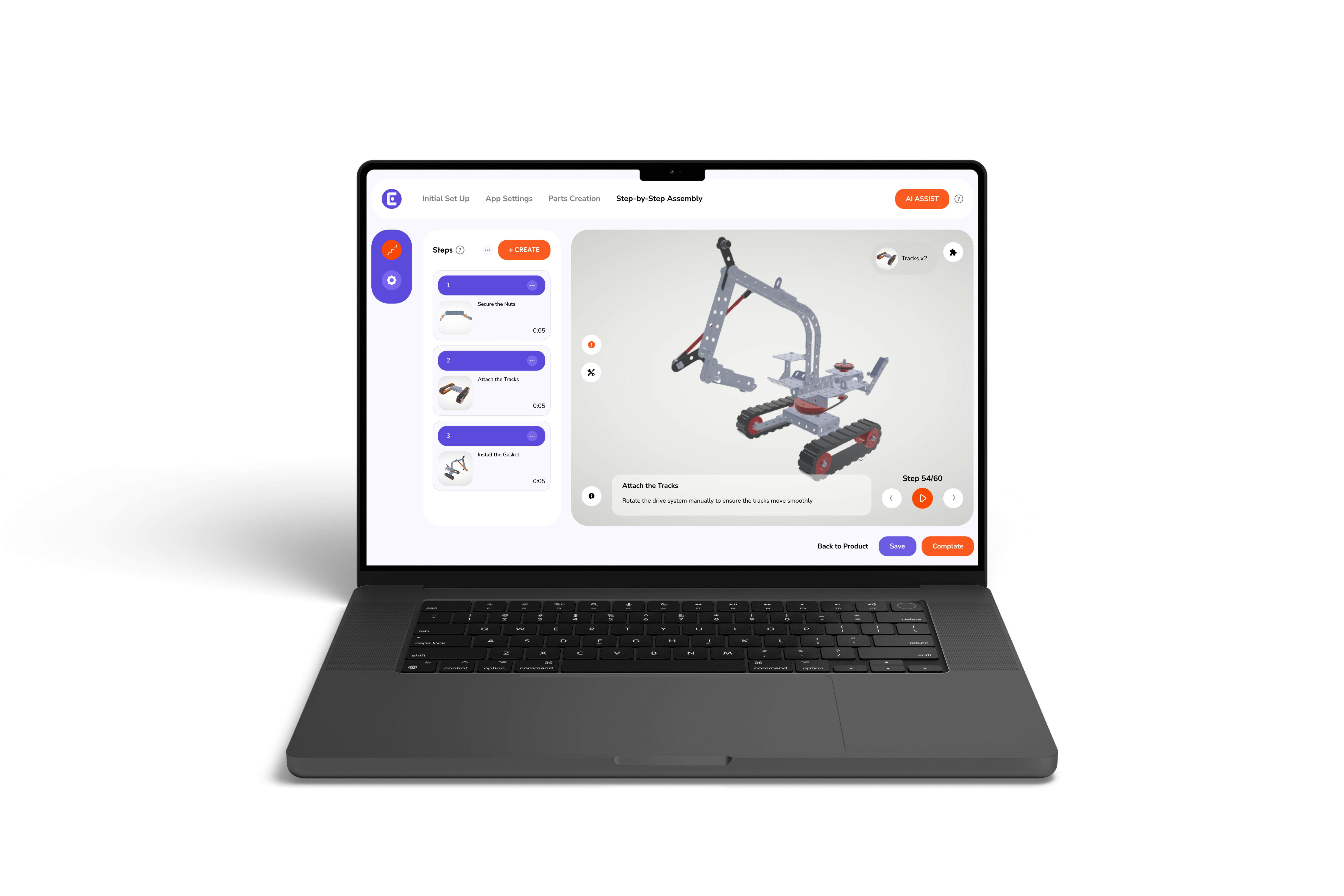
3D interaction: Users can rotate and align the model with what they see
Interactive callouts: Parts are clearly identified with relevant details
This approach aligns with how people naturally process spatial information, reducing confusion and accelerating completion.
The Validation Loop: Quality Control at the User Level
One of the key advantages of digital assembly is the ability to guide users through a structured process.
In traditional manuals, critical steps can be skipped without detection. This can lead to product issues later, including warranty claims.
With digital solutions, instructions can enforce a validation loop:
Users confirm completion before moving forward
Critical steps are reinforced visually
Errors are reduced during assembly, not after
This effectively extends quality control beyond the factory and into the user experience.
Real-Time Analytics: Eliminating Guesswork
Unlike paper manuals, digital instructions generate actionable data.
Manufacturers can understand:
Where users spend the most time
Which steps cause confusion
How long full assembly takes
This visibility enables continuous improvement. If users consistently struggle with a specific step, it highlights a deeper issue in either the instruction or the product design itself.
Updates can be made instantly and deployed globally, without reprinting or delays.
Sustainability: A Practical Advantage
Sustainability is no longer a secondary consideration. It directly impacts cost and brand perception.
Improved ESG (Environmental, Social, and Governance) alignment
Every prevented return further reduces environmental impact by minimizing reverse logistics.
Implementing the Playbook
Adopting digital assembly solutions does not require a complete operational overhaul.
Most manufacturers already have the necessary assets in the form of 3D CAD models.
A typical implementation includes:
Identifying high-support products
Converting existing manuals into interactive guides
Providing access via QR codes or embedded links
This approach allows for gradual adoption while delivering immediate impact.
Conclusion: The Competitive Edge of Ease
In competitive markets, where product features are often comparable, usability becomes the differentiator.
Investing in innovative assembly solutions reduces support costs, improves customer satisfaction, and strengthens overall product performance.
The manual is no longer an afterthought. It is a core component of the product experience.
FAQs
No items found.
Subscribe to our Newsletter
Get fresh ideas + Easemble updates, straight to your inbox
Thank you! Your submission has been received!
Oops! Something went wrong while submitting the form.
Transform Furniture Setup Forever
Switch to Interactive 3D Guides Today. Experience how Easemble™ can boost satisfaction, cut support costs, and drive positive reviews for your furniture brand.
.png)