September 3, 2026
Modular Construction Is Scaling Faster Than Its Documentation
.png)

Most modular and off-site construction companies get their production line right before anything else. They standardize the panel designs, tighten the factory workflow, and reach a point where a wall system or a modular unit comes off the line looking the same every time. That part of the business matures fast, because it has to. Repeatable production is the whole reason a company builds off-site in the first place.
Modular construction documentation rarely keeps up at the same pace.
While the physical product becomes more consistent, the assembly instructions and installation documentation used to put it together in the field often stay exactly where they started: A digital assembly instruction built two product revisions ago. A printed binder that no longer matches the current bracket design. Knowledge that lives mainly in the head of the one installer who's been doing this since the company's first project. Nobody realized that documentation mattered. While production scaled on purpose, documentation scaled by accident, or did not scale at all.
That gap is easy to miss from inside the company, because the factory floor looks fine. It shows up somewhere else: on a job site, three states away, when a newer installer opens an outdated manual and has to guess.
Tribal knowledge doesn't travel. In the early stages of a modular construction company, a small group of people usually understands the assembly process end-to-end. They were there when the design was finalized. They've installed the product a dozen times and can troubleshoot without opening a manual. That works until the company opens a second market or brings on a subcontracted crew. The knowledge that made the first few projects successful doesn't automatically transfer to the tenth installer on the fifth site.
Products change faster than paperwork. A connector gets redesigned. The panel gets lighter. A fastening method gets simplified. Each change is a win for manufacturing and a liability for construction documentation, because someone now has to track down every printed manual and every PDF sitting on a site laptop and replace them. Without reliable revision control, older versions keep circulating long after the design has moved on, even as the broader industry keeps moving toward digital prefabrication and away from paper-based processes.
The people who build it aren't the people who install it. This is the part that makes modular construction different from a lot of manufacturing. The factory team and the installation crew are often separate, sometimes working for different companies entirely, sometimes never in the same building. That handoff is exactly where assembly manuals need to be clearest, and it's frequently where they're weakest, because they were written once, early on, and never revisited for the audience actually using them in the field.
The consequences aren't abstract to anyone who's run a modular project.
Unclear or outdated instructions lead installers to make reasonable guesses that turn out wrong, and installation errors caught after the fact almost always cost more to fix than getting the step right the first time. A single confused crew can hold up an entire site, which undercuts the speed advantage that made off-site construction attractive to the client in the first place. Two crews working from two different manual versions, or one working from a manual and one working from memory, won't produce identical results, and that inconsistency is hard to explain to a client who was promised the predictability of a manufactured product.
There's also a training cost that compounds over time. Every new installer who has to be personally walked through the process by a senior team member is a dependency that doesn't scale. As the company grows, new sites and new hires end up waiting on the availability of a small number of experienced people, and installer training becomes bottlenecked by headcount instead of process.
None of this comes from a lack of effort. It comes from documentation systems- a mix of Word docs, PDFs, printed binders, and institutional memory- that were never built to be maintained at scale.
Documentation debt is often invisible until someone looks for it directly. A few practical signs tend to show up before the bigger problems do:
Any one of these on its own might just be a rough patch. Several of them together usually point to a documentation system that hasn't kept pace with how much the company has grown.
The manufacturers who get ahead of this tend to land on the same few principles, regardless of what they build.
One version of an assembly manual kept current everywhere it's used. When a design changes, the documentation should change with it, ideally without a separate reprinting or manual redistribution step. If a revision doesn't reach every copy quickly, the system is still fragmented, just less obviously.
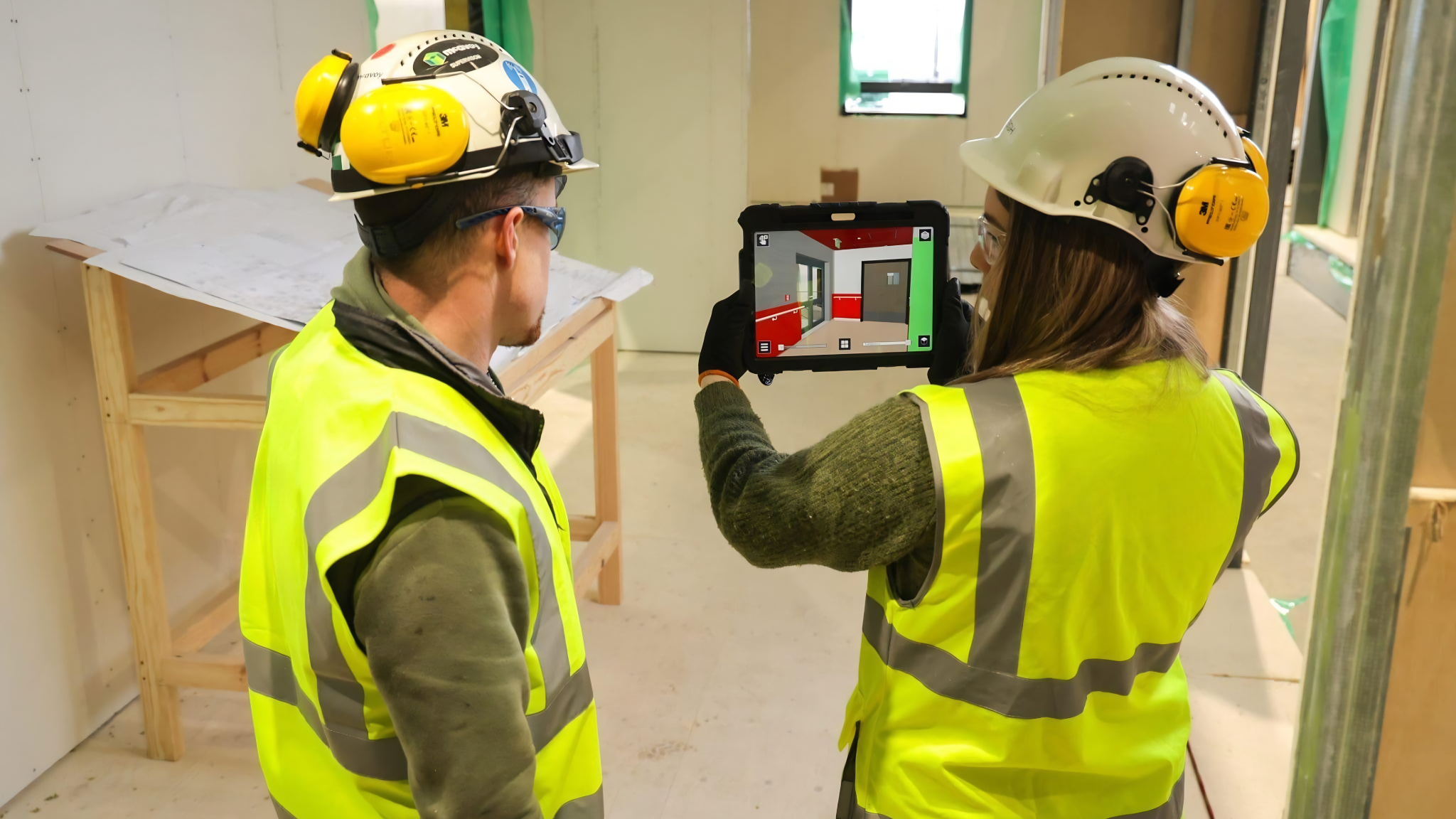
Digital assembly instructions built for someone standing on a job site, not someone reading at a desk. A wall of text or a flat diagram asks a lot of an installer trying to match parts to steps. Being able to see how components fit together in 3D, rotate a view, or isolate a single step removes a layer of guesswork that text alone can't, a point Easemble has explored in more detail when looking at why 3D instructions tend to outperform PDF manuals.
A documentation process that scales without a specialist attached to it. If updating a manual takes an engineering team days every time a product changes, the documentation process becomes its own bottleneck, the exact problem it was supposed to solve.
This is the direction more modular and prefabricated construction manufacturers are heading: replacing static PDFs and printed manuals with digital work instructions and interactive 3D assembly instructions that installers can carry into the field on a phone or tablet instead of a binder.
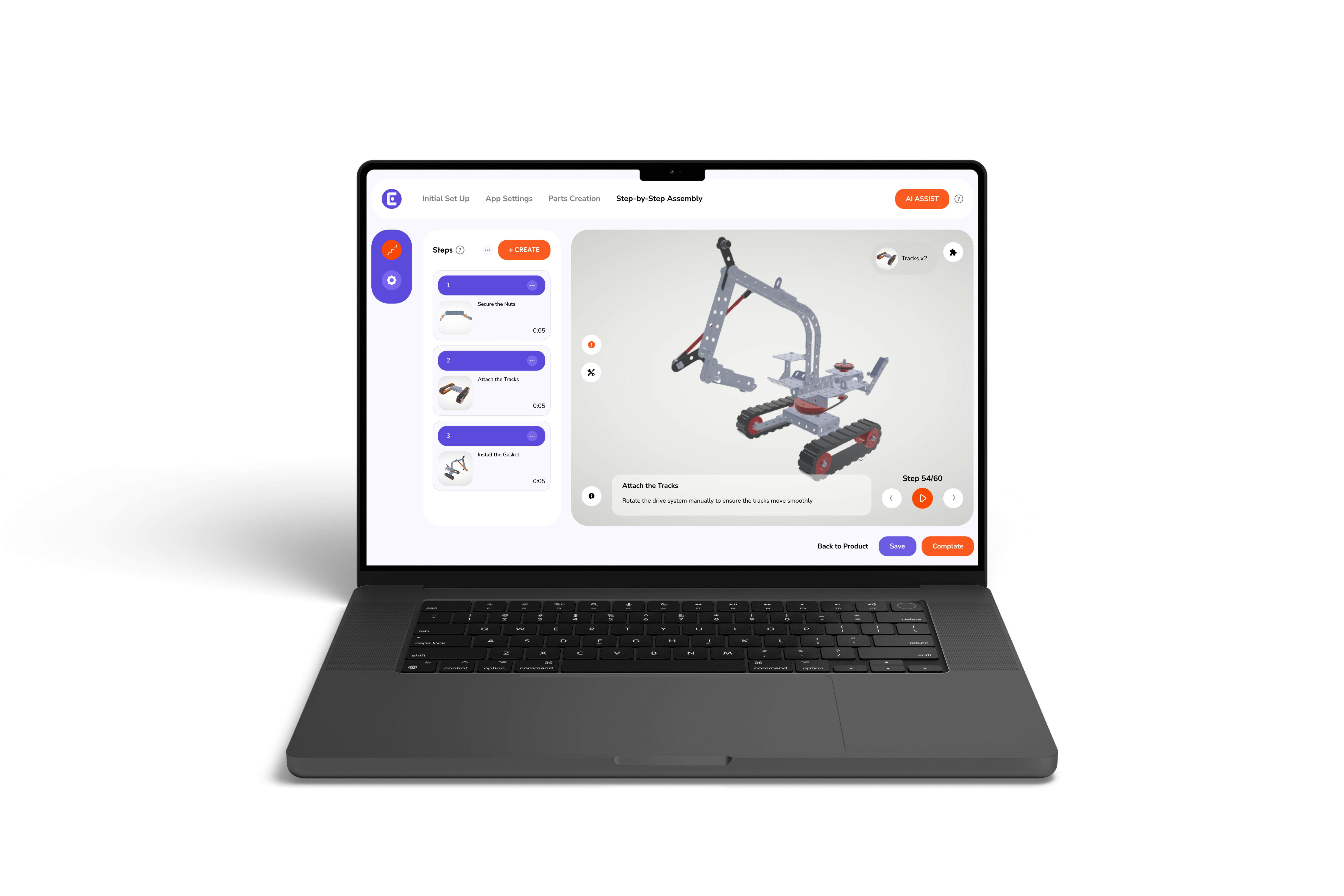
Easemble's platform for modular construction manufacturers is built around that specific handoff between factory and field. According to Easemble's product description, manufacturers upload the 3D models they already have, from tools like SketchUp, SolidWorks, or Tekla, and turn them into interactive assembly manuals that installers can rotate, zoom into, and step through on site. Easemble states that updates made to a manual are published across web, mobile, and PDF formats, and that its mobile app supports offline access so installers can use manuals without a live connection. Manufacturers evaluating any digital work instruction platform, including Easemble, should confirm current functionality directly, since product capabilities can change over time.
Two examples from Easemble's published customer stories illustrate what this handoff can look like in practice. According to Easemble's case study, Come Together used interactive 3D assembly manuals to coordinate multiple trades on site and reported assembling a full modular housing unit in roughly eight hours. In a separate case study, Techno Guard, which installs systems across remote data center sites, reports that its own engineering team built assembly manuals directly in Easemble without specialized training, and that installers used offline access on site, with the company reporting fewer installation errors and shorter onboarding time for new installers as a result.
These are outcomes reported by the customers in Easemble's published case studies, not independently audited figures, and results will vary by project and product. They're worth reading in full for the specifics behind the summary. Either way, neither example replaces good engineering or a well-run factory. They show documentation catching up to the rest of the operation instead of lagging behind it.
If this sounds familiar, trying to fix everything at once rarely works. A more realistic starting point:
Audit what actually exists. Pull together every version of your current installation documentation and check which ones match your current product revision. The gap between what should be current and what's actually circulating usually tells you how urgent this is.
Pick one product line first. Start with whichever one generates the most installer questions or rework, and use it to prove out a better process before rolling it out everywhere.
Ask the installers, not just the writers. The people using the manuals know exactly where they fall short, and their feedback is usually more useful than another internal review.
Build revision control from day one. Whatever replaces your current documentation should make it structurally difficult for an outdated version to keep circulating in the field.
Modular construction earned its reputation for speed and consistency by treating production as a process worth engineering carefully. Construction documentation deserves the same treatment, not as something handled after the product is finished, but as part of how it actually gets delivered. For more on how this shift is playing out across the industry, see Easemble's look at the rise of modular construction.
An assembly manual is typically a static document, while a digital work instruction is an interactive, maintainable set of instructions designed for use during the work itself. A traditional manual may be distributed as a PDF or printed booklet and shown once; a digital work instruction is meant to be updated as the product changes and referenced live, on site, rather than looked up separately from the task.
Modular construction separates manufacturing from installation more sharply than traditional building methods, which is the main reason documentation gaps appear. The team that builds a component in the factory often isn't the team that installs it on site, sometimes working for a different company entirely, and that handoff is where instructions most often fall out of sync with the current product.
The most reliable way is maintaining one editable source that installers access directly, rather than distributing copies that need to be manually swapped out. Revision control matters here: when the product changes, the instruction should update in that single source instead of requiring someone to track down every printed or downloaded version already in circulation.
Most installer errors trace back to unclear or outdated instructions, missing context about how parts fit together, or reliance on knowledge that was never written down anywhere. It's rarely a skill problem on the installer's part. It's usually a documentation problem upstream of them.
Yes, on platforms designed for field conditions, though this depends on the specific product. Some digital work instruction tools, including Easemble according to its own case studies, offer offline access so installers can download manuals in advance and use them fully on site without a live connection, worth confirming directly with any vendor before relying on it for a remote or low connectivity site.