May 26, 2026
Why the Future of Product Assembly Relies on AI and QR Codes While Most Brands Still Print PDFs

.png)

The paper manual is not just outdated. It is a liability.
Every time a customer unfolds a tiny, printed sheet, squints at a 2D diagram, and gives up halfway through, that is a return waiting to happen. In fact, the average ecommerce return rate is about 20-25%, driven largely by issues like fit and assembly confusion.
That is a 1-star review being written in their head. That is a support ticket your team will have to answer tomorrow morning.
And yet, in 2026, most brands are still printing PDFs.
The good news? A small group of forward-thinking manufacturers has already moved on. They are using augmented reality product guides, AI, QR codes, and gamification to turn assembly into a seamless, even enjoyable experience. This article breaks down exactly where the industry is going and why the brands that move first will own the category.
Let's be honest about what a printed PDF costs you.
It is not just paper and ink. It is the full picture:
A printed manual cannot tell you that 40% of your customers quit at Step 6. An augmented reality product guide can. That difference alone is worth paying attention to.
The brands winning in eCommerce today are not just selling better products. They are delivering better experiences, and assembly is one of the biggest experience moments in the entire customer journey.
Here is where the industry is heading. These are not concepts. They are live, working features that manufacturers are using right now.
Augmented reality product guides place digital instructions directly over the real world through a customer's phone or tablet. Instead of reading a step, the customer sees it — overlaid on the actual product in front of them.
This is not a gimmick. It is the clearest possible instruction format a human brain can follow.
With AR assembly instructions, customers can:
The result is fewer errors, fewer calls to support, and far fewer returns caused by wrong assembly. Augmented reality product guides do not just improve the experience; they protect your margins.
You do not need to overhaul your entire packaging to start modernizing. A single QR code for instant setup can bridge the gap between physical product and digital experience immediately.
Here is how smart brands are using QR codes right now:
A QR code for instant setup removes every barrier between the customer and the answer they need. No app store searches. No Google rabbit holes. Just scan and go. It is the lowest-effort, highest-impact change a product brand can make this year.
AI is changing what a manual can actually do.
Traditional manuals are static. They say the same thing to every customer, regardless of how confused they are or what they have already tried. AI changes that dynamic completely.
With AI built into your assembly flow, you can offer:
Platforms like Easemble use built-in analytics powered by AI to show brands exactly where customers get stuck, so product and support teams can fix the root cause, not just manage the symptom.
This one surprises people. But it works.
Gamified assembly instructions turn a frustrating chore into a rewarding experience. Think progress bars, step completion indicators, celebration moments when a section is done, and visual feedback that keeps the customer moving forward.
Why does this matter for your business?
Gamified assembly instructions are especially powerful for toy manufacturers, baby product brands, and furniture companies where assembly complexity is high and customer frustration peaks quickly.
Still not sure the switch is worth it? Here is a straight comparison.
The numbers make the case. Moving from a static PDF to a 3D interactive PDF manual or a fully interactive digital guide is not a cost; it is an investment that pays back through fewer returns, less support volume, and higher customer satisfaction.
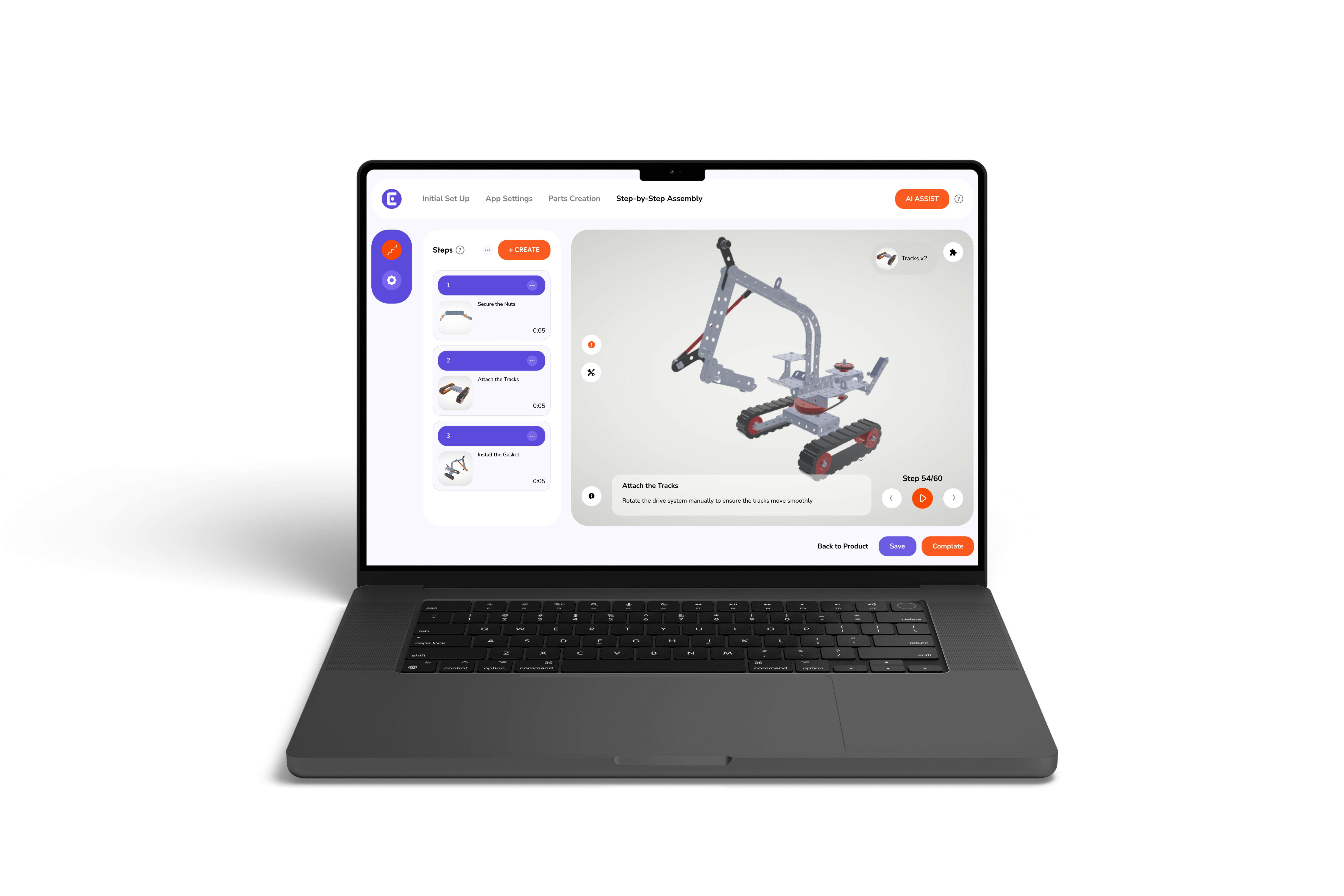
Easemble was built specifically for this shift. It is the platform that lets product manufacturers and eCommerce brands create augmented reality product guides, embed QR codes, add gamification and publish across web, mobile, and tablet, without any coding or design experience.
The workflow is simple:
Brands across furniture, construction, toys, baby products, and industrial equipment are already using Easemble to modernize their assembly experience, and the results show up in reviews, return rates, and support ticket volume.
The brands printing PDFs today are not bad brands. They are just behind.
The technology to deliver augmented reality product guides, AI-powered insights, QR-based access, and gamified assembly instructions is not experimental anymore. It is available, affordable, and proven.
The only question is who moves first in your category.
Because the brand that makes assembly feel effortless becomes the brand customers recommend. They come back. They leave reviews. They build your reputation for you.
Your manual is not just an instruction sheet. In the hands of the right platform, it is a sales asset, a support tool, a retention engine, and a brand statement, all in one.
The future of product assembly is already here. The only thing left is to decide when will you join it.