May 22, 2026
Why Your Product Manual Can Win Sales or Lose Them

.png)

The box is open. The screws are counted. The panels are spread across the floor. Then the manual arrives, and instead of helping, it adds another layer of stress. That is the moment when a product stops feeling excited and starts feeling like work.
For the customer, this is where trust either holds or slips. For the brand, it is the first real test of whether the sale was the beginning of loyalty or the start of regret. A manual should not feel like a hurdle. It should feel like the brand is stepping in at the right moment and making the next move obvious. The real question is simple: is your manual helping the sale, or quietly undoing it?
The product experience starts the moment the box opens. In CX terms, this is the First Moment of Truth (FMOT), where the customer forms an immediate judgment about whether the product feels easy or difficult to engage with. Before the first screw goes in, they are already interpreting signals from packaging, instructions, and the clarity of setup.
That is why assembly is not a side task. It is part of the product experience itself.
The first step sets the tone fast. If it feels clear, the customer relaxes. If it feels confusing, frustration builds almost immediately. At this stage, they are not just assembling furniture. They are forming a judgment about whether the brand is thoughtful or careless.
A manual shapes the FMOT just as much as design or packaging. It becomes the brand’s first real “voice” inside the customer’s home. If that voice feels unclear, the experience weakens before the product is even fully built.
Bad assembly does more than ruin a customer’s day. It quietly shapes how they feel about the brand long after the purchase is done, and that impression tends to stick more than companies expect.
If the setup feels confusing, customers rarely take it on themselves. They blame the product and the brand behind it. In that moment, even a solid product can start feeling like a poor choice.
Many customers do not complain or return the item, but they remember the frustration. That memory is often enough to stop them from buying again, even if the product itself works well.
In most cases, the impact shows up as:
The product may still perform as expected, but the experience around it quietly weakens loyalty over time.
A product can perform well and still receive poor reviews if the setup experience fails. Most customers do not separate product quality from the effort required to build it. This also connects to the Second Moment of Truth (SMOT), where the customer reflects the experience and translates it into a review or recommendation.
The issue usually shows up in a few clear ways:
That is why assembly UX is not just a support concern. It directly affects how the product is perceived in the market and how many future customers decide to buy.
When assembly goes badly, many customers simply give up. They pack the product back up and send it back, even when nothing is technically broken. In many cases, the return is driven by frustration, not by product quality.
Returned products still carry a high cost. They need to be shipped back, inspected, repacked, and sometimes discounted or written off entirely. What often starts as an assembly issue quickly turns into a measurable financial loss that the business has to absorb.
The cost goes beyond the return itself. It usually includes:
According to Forrester’s Total Economic Impact (TEI) model, a single customer support interaction can cost businesses around $23 per contact in fully loaded service cost.
In the context of assembly-heavy products, even a small number of repeated “how do I do this?” Queries or setup-related tickets can quietly accumulate into a meaningful operational expense over time.
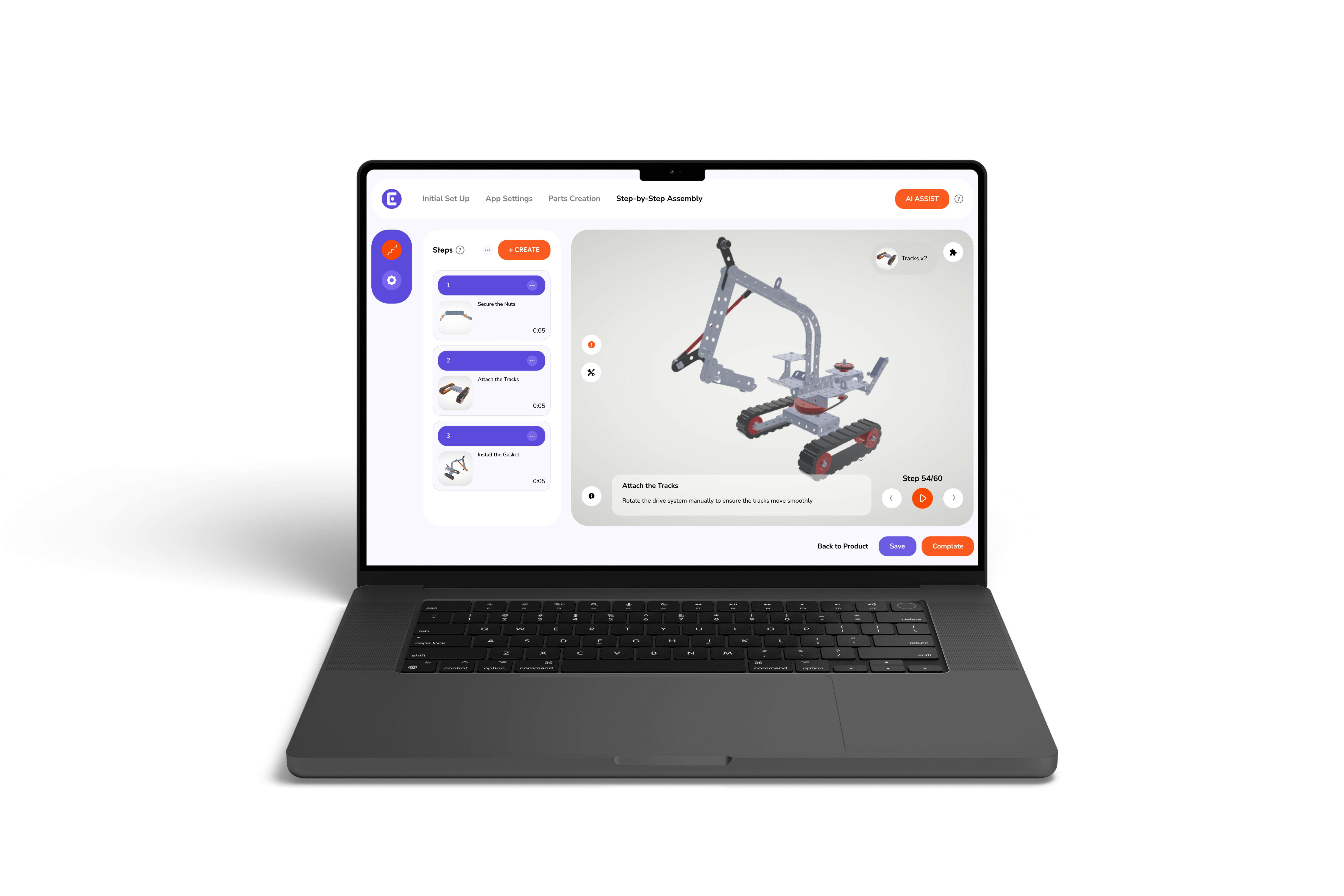
People no longer expect to struggle through unclear paper manuals. They want instructions that match how they build: step by step, at their own pace, and without guesswork. That is why digital assembly instructions are quickly becoming standard.
Digital guides make the process easier to follow because users can:
Moreover, unlike flat pages, digital instructions can show the same step from different views with video or animation.
3D manuals remove uncertainty by showing how parts fit together in real space. This reduces hesitation and improves confidence during assembly.
A better guide does more than explaining assembly. It shapes the customer’s entire first impression of the product and the brand behind it.
Easemble started from a simple gap in the post-purchase experience: customers already own the product, but struggle during assembly. That moment often decides whether the experience feels smooth or frustrating, which is why it sits closer to customer experience than just software.
A purchase does not end at checkout. The brand is still responsible for how easily the product can be used. When assembly feels unclear, it becomes a CX problem, not just an instruction issue.
Easemble sits across these priorities, where post-purchase friction directly shapes brand perception.
Clearer instructions reduce confusion, which naturally lowers support queries and improves how customers feel about the product.
In most cases, the impact shows up as:
At that point, assembly UX shifts from a small operational detail to a meaningful part of the overall customer experience.
A product manual can do one of two things. It can make the customer feel confident and supported, or it can make the whole purchase feel harder than it should have been. That difference shows reviews, returns, support costs, and repeat business. It also shows up in how people talk about the brand afterward.
Easemble helps turn that weak point into strength. If you want fewer avoidable returns, lower support load, and a better assembly journey that builds loyalty instead of friction, see how Easemble can help make that happen.