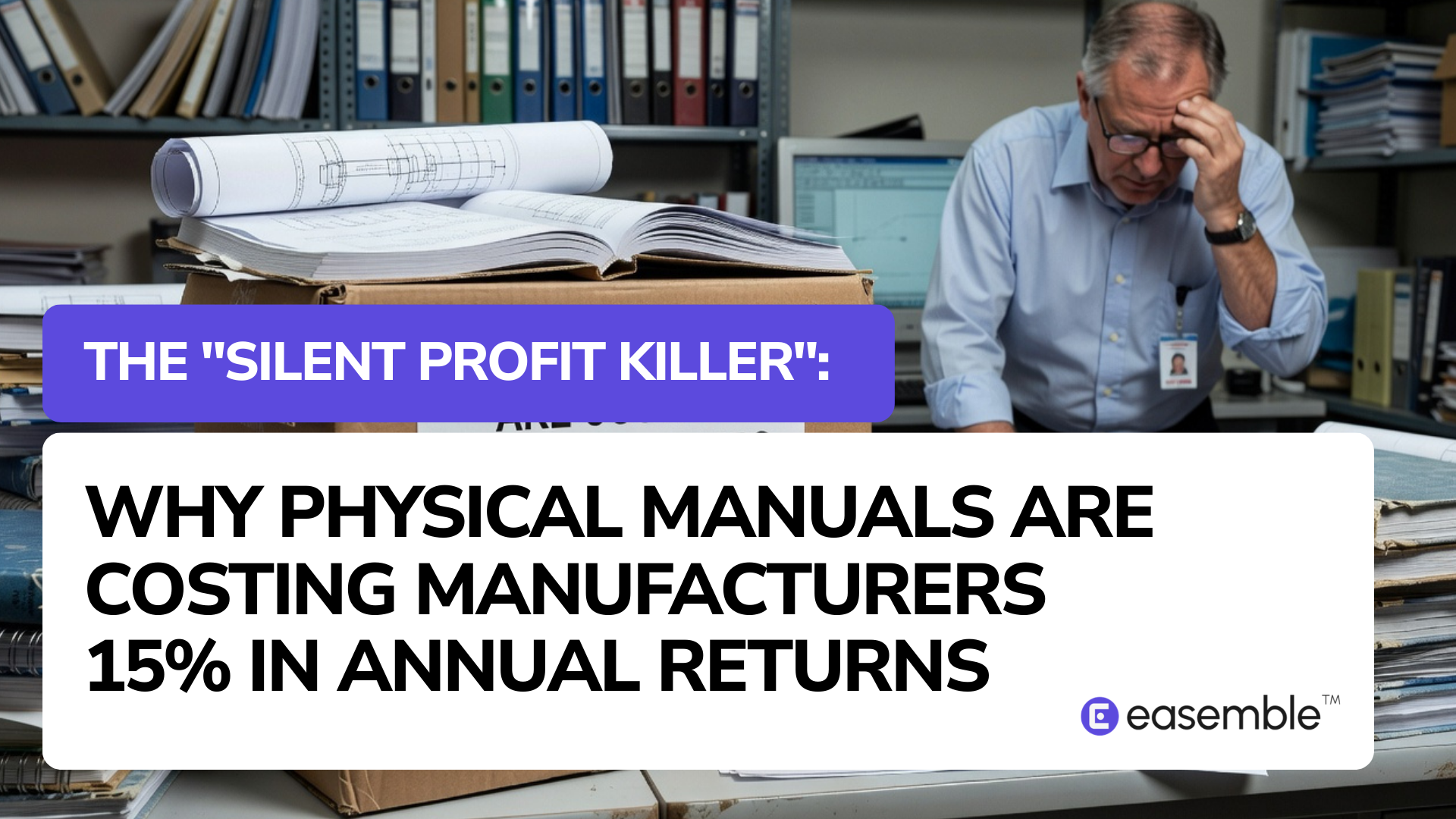
The Silent Profit Killer: Why Physical Manuals Are Costing Manufacturers 15% in Annual Returns
We obsess over every screw tolerance, then ship it with a photocopy of a 1995 manual. That $0.50 piece of paper is quietly killing a $500 sale.
The math of modern manufacturing is changing.
Companies invest millions in R&D. They obsess over the tolerances of every screw. They refine design, materials, and performance. Then the product is shipped with a 40-page, black-and-white paper booklet that feels like a photocopy from another era.
The result is a silent profit leak that often goes unnoticed until returns begin to rise.
In 2026, product returns are not just a logistics issue. They are a customer experience failure. More specifically, they are often an assembly failure.
If a customer cannot assemble a product quickly and confidently, the frustration is not attributed to the manual. It is attributed to the brand.
The 15% Leak: The Cost of Paper Frustration
Industry data highlights a consistent pattern: a significant share of returns in furniture, outdoor gear, and consumer electronics are classified as “NFF” (No Fault Found).
The product is not broken. It is not defective. The user simply could not complete the assembly.
When a customer opens a product, they are in a moment of high intent. They are motivated and engaged. However, every minute spent interpreting unclear 2D diagrams increases cognitive load.
Once frustration reaches a certain point, returning the product becomes easier than completing the process.
The 2D-to-3D Translation Gap
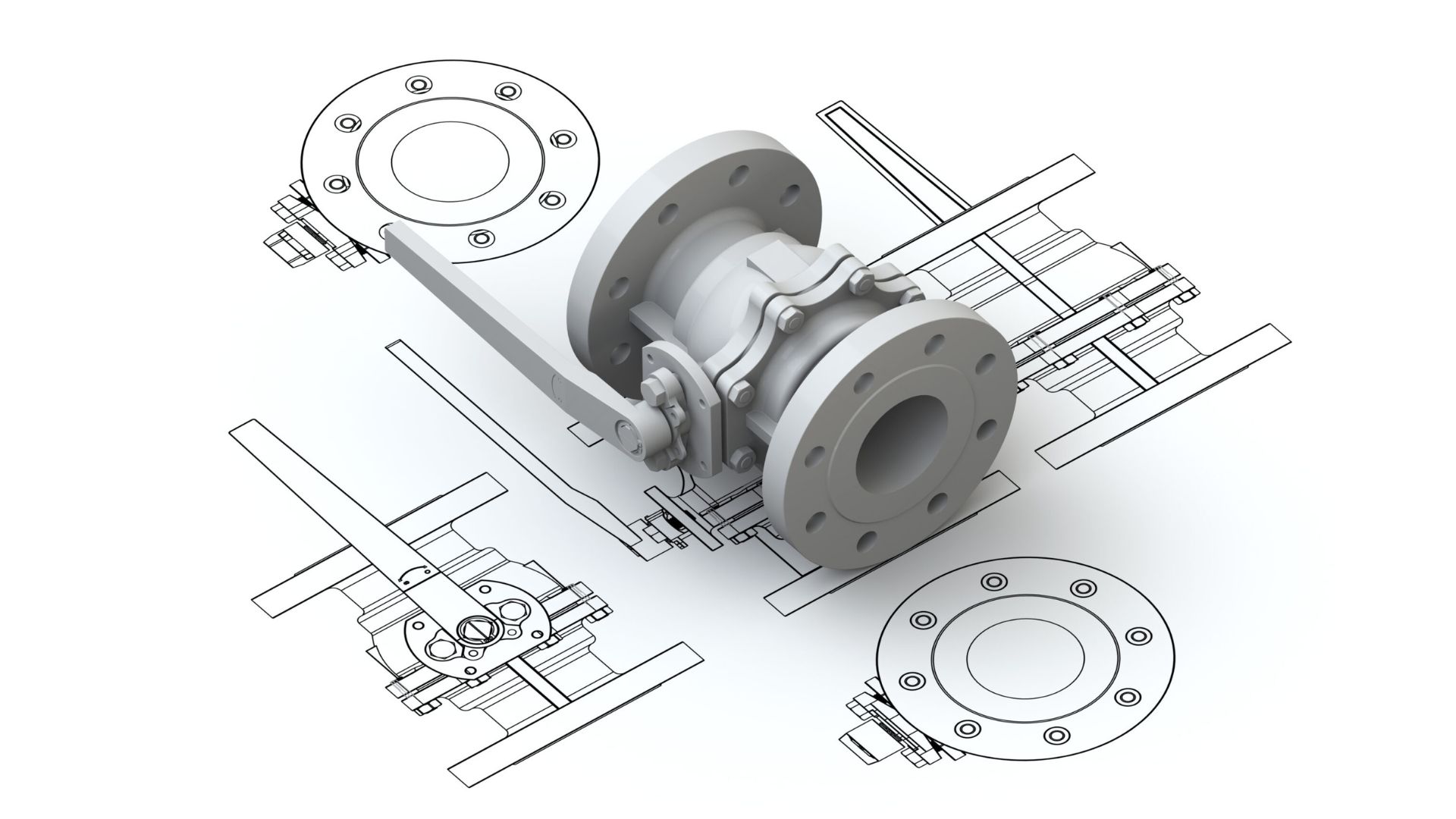
Paper instructions are inherently limited.
Users are asked to translate static, 2D visuals into a physical, 3D outcome. This creates several common issues:
Perspective errors: Is the part facing left or right?
Scale ambiguity: Is this the correct component?
Hidden steps: What happens on the opposite side during assembly?
Paper cannot adapt or respond. It is static information in a dynamic process.
The Shift to Digital Assembly
The solution is not better drawings, but a different medium.
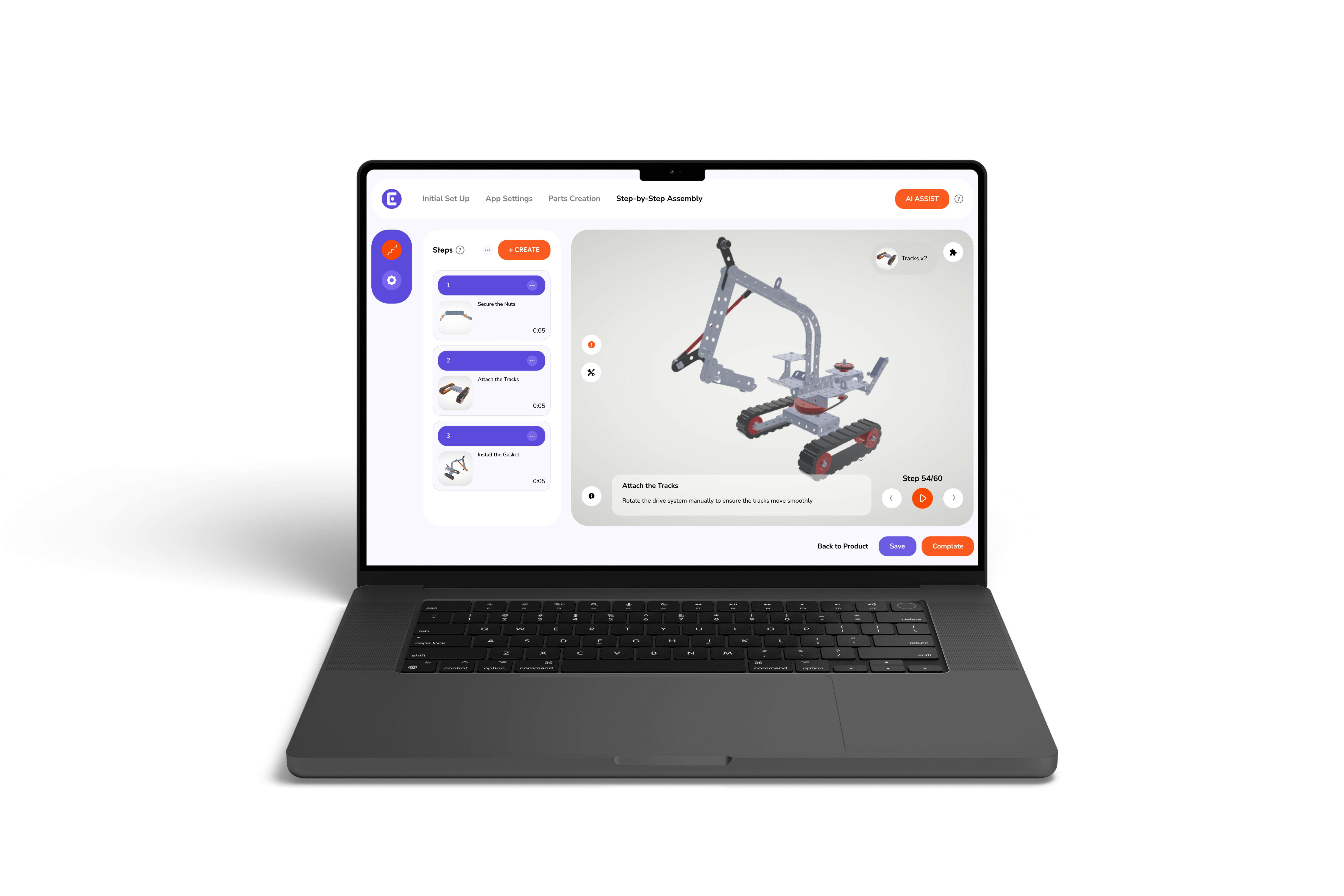
Digital assembly solutions replace static manuals with interactive experiences, addressing the core issues behind assembly friction.
1. Real-time 3D interaction
A 3D model can be rotated, zoomed, and explored. Users can clearly understand orientation and alignment, eliminating common assembly errors.
2. Augmented reality guidance
AR enables users to visualize how parts fit together directly within their environment. This removes uncertainty and reinforces confidence during assembly.
3. Behavioral data insights
Unlike paper manuals, digital instructions provide visibility into user behavior. It becomes possible to identify where users struggle and improve both the instructions and the product design.
The Sustainability Factor
Beyond returns, there is a measurable environmental impact.
Large volumes of printed manuals are produced, used briefly, and discarded. Transitioning to digital instructions reduces waste while aligning with ESG (Environmental, Social, and Governance) expectations.
Final Thoughts: A New Standard
The instruction manual should not be an afterthought. It is the connection between the product and the user.
If that connection is unclear, it creates friction. If it is intuitive, it creates confidence.
Replacing paper manuals with digital, interactive assembly is not simply a format change. It is a shift toward better user experience, lower operational costs, and stronger customer relationships.
FAQs
No items found.
Subscribe to our Newsletter
Get fresh ideas + Easemble updates, straight to your inbox
Thank you! Your submission has been received!
Oops! Something went wrong while submitting the form.
Transform Furniture Setup Forever
Switch to Interactive 3D Guides Today. Experience how Easemble™ can boost satisfaction, cut support costs, and drive positive reviews for your furniture brand.
.png)