March 12, 2026
Humanizing the Industrial Experience: Rethinking Assembly Instructions
Most companies treat the manual like a legal requirement.
Easemble built a company around it.
.png)

In the industrial world, innovation is often defined by speed, torque, and throughput. We celebrate faster robotic arms and more efficient logistics algorithms. But there is a more fundamental question that is often overlooked: what happens when the machine meets the human?
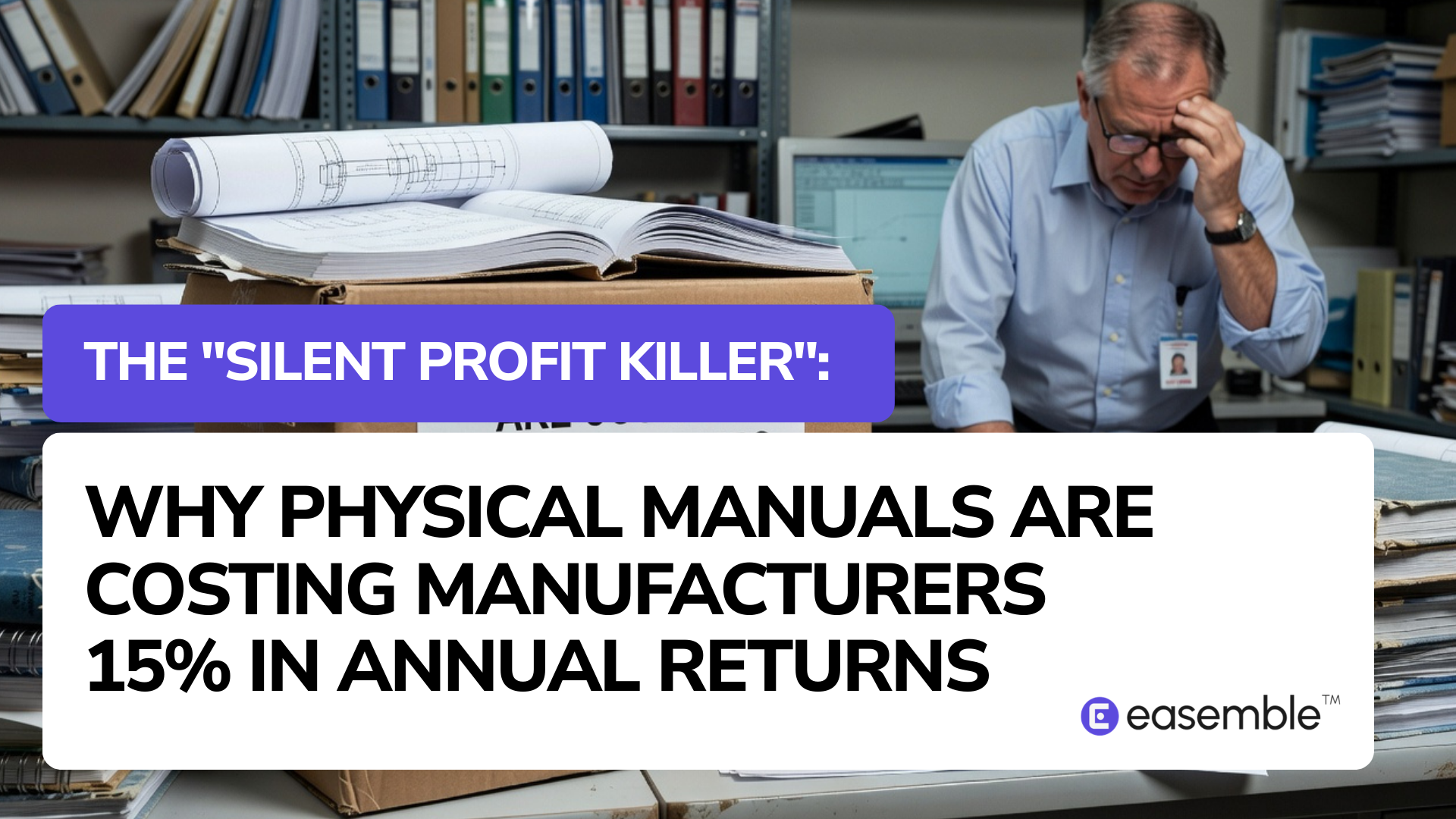
For decades, the user manual has been one of the most neglected parts of the product lifecycle. Companies spend years engineering a product, only to deliver it with a static, confusing, 2D document that feels like a relic of the 1990s. The reality is simple: the greatest product in the world is useless if the person holding the tools cannot assemble it.
Product design often suffers from the “curse of knowledge.” Engineers know where every bolt goes because they built the CAD file. But the customer is seeing the product for the first time.
Traditional paper manuals require users to perform a complex mental task: translating 2D instructions into a 3D understanding. This creates a significant cognitive load. Every time a user has to interpret a diagram or guess orientation, it introduces what can be described as “instructional friction.”
This friction is a silent killer of brand loyalty. It leads to frustration, support tickets, and ultimately “no fault found” returns.
Human-centric design should not stop at the product itself. It must extend to the instructions. If the assembly process is not intuitive, the design is incomplete.
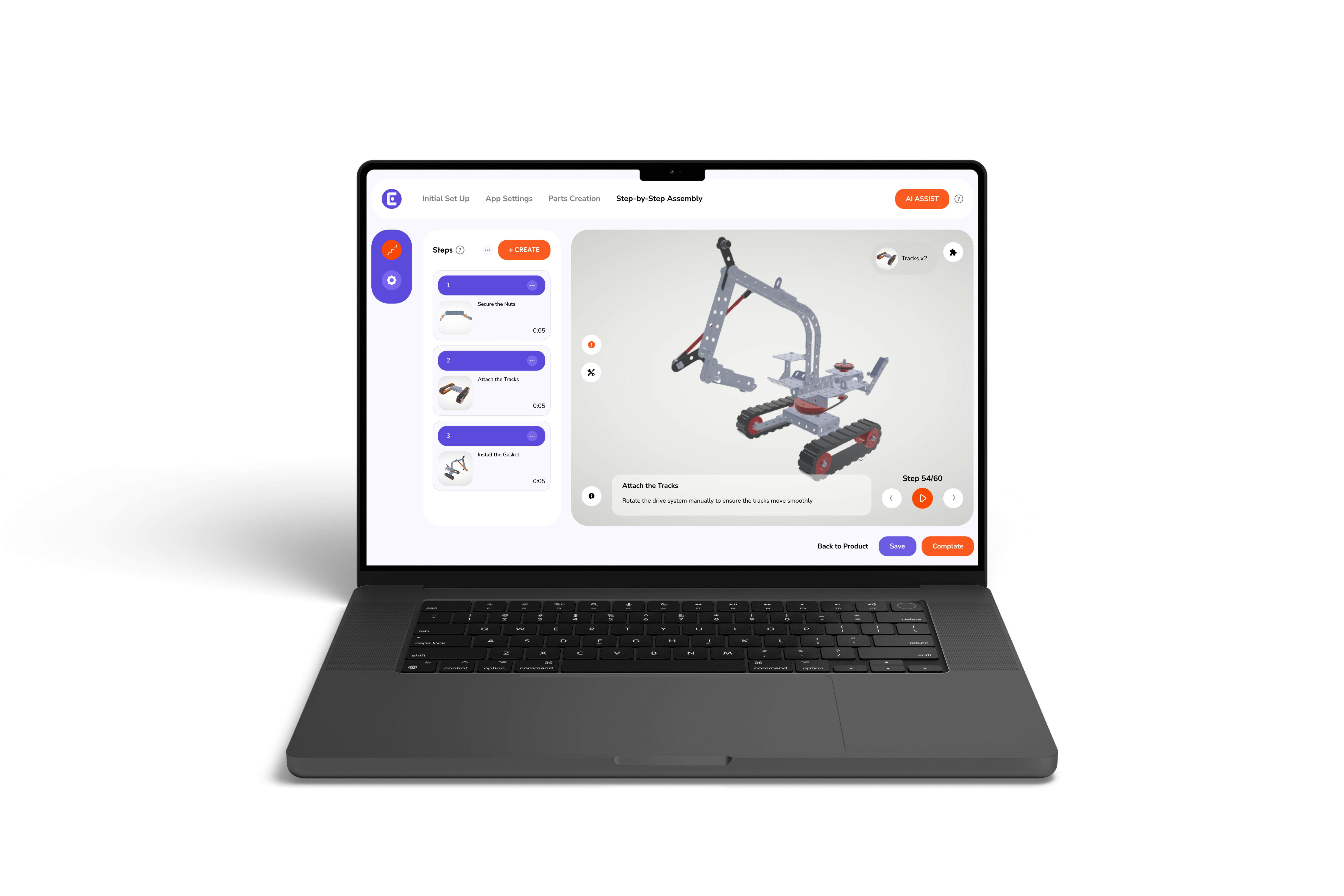
The shift toward digital assembly is about replacing “telling” with “showing.” Instead of static documents, users are guided through interactive experiences.
Why does this matter? Because 3D is the natural language of spatial understanding. When a user can rotate a part, zoom in on a detail, and view the exact motion required for assembly, the need for interpretation disappears.
This is not just about instructions. It is about confidence. Clear, visual guidance removes uncertainty and allows users to move through the process with clarity.
This represents a broader evolution in manufacturing innovation. It is no longer only about hardware performance, but about how effectively the product can be used. Applying user experience (UX) principles to traditionally technical processes creates a more accessible and intuitive experience.
The role of the manual is changing.
Sustainability: Printing millions of pages that are rarely used is no longer justifiable. Digital delivery reduces waste while improving accessibility.
Agility: As products evolve more rapidly, static manuals become outdated almost immediately. Digital instructions can be updated in real time.
Data-driven empathy: For the first time, it is possible to understand where users struggle and improve both the instructions and the product accordingly.
Documentation should not be viewed as a legal requirement, but as a competitive advantage.
The manual is the first interaction a customer has with a product after purchase. If that interaction is confusing, the experience begins with frustration. If it is clear and intuitive, it builds confidence and trust.
In today’s landscape, product and experience are inseparable. The value of a product is directly tied to how easily it can be understood and assembled.
The future of manufacturing is not only faster and more efficient. It is visual, digital, and human-centered.